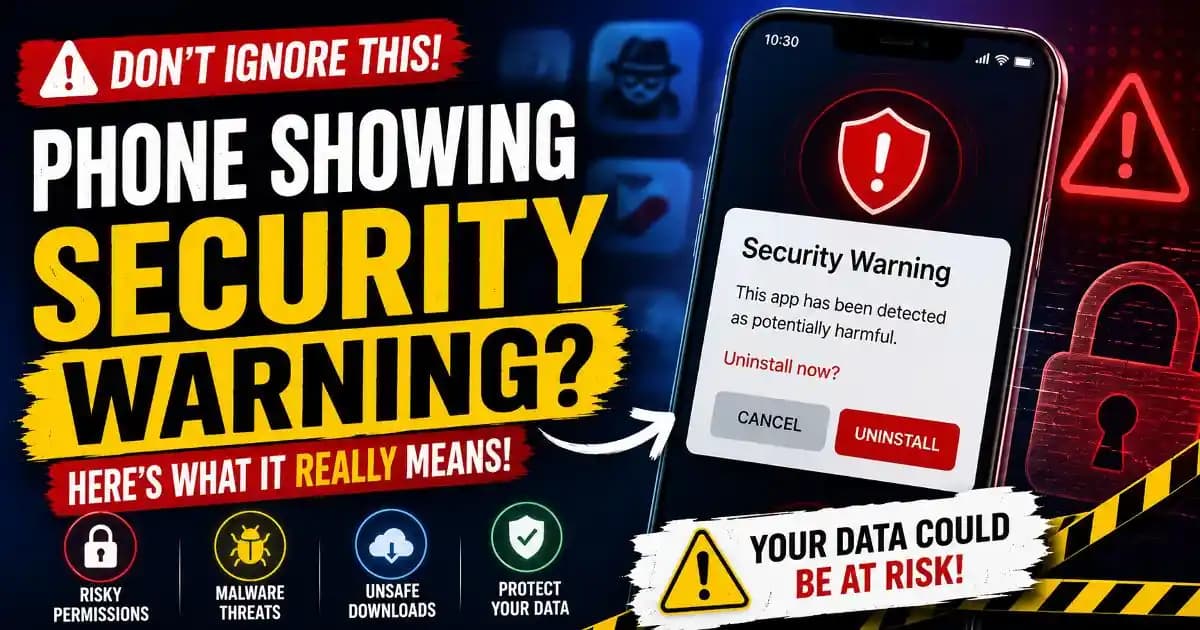
Phone security warning app alerts are becoming increasingly common for Android users who suddenly notice unusual notifications after installing a new application. A device that previously felt normal may begin showing pop-up warnings about harmful behavior, risky permissions, Suspicious activity, unsafe downloads, or apps interfering with system security.
For many users, the experience feels confusing and sometimes alarming.
The warning often appears unexpectedly. Maybe the app came from an advertisement, a messaging link, a third-party APK site, or even an official app marketplace. At first, everything seemed normal. Then the phone started behaving differently. Notifications appear repeatedly. Google Play Protect becomes active. Battery usage changes. New permission requests appear.
Users naturally wonder whether the app is actually Dangerous or whether Android is simply overreacting.
The answer is usually more complicated than either extreme.
Modern Android Security systems are designed to detect behavior patterns that may place users at risk, even when an app does not contain obvious malware. During 2025 and 2026, smartphones increasingly rely on layered behavioral analysis rather than simple virus detection alone.
This means Security (1) warnings can appear because an app behaves aggressively, requests sensitive Permissions, interacts strangely with other apps, or resembles patterns commonly associated with scams and malicious software.
Why Android Phones Trigger Security Warnings More Often Today
Android Security systems evolved significantly over the past few years.
Earlier Mobile protection mainly focused on Identifying known malware signatures. Modern Android ecosystems now monitor broader behavioral signals including:
- Permission abuse
- Accessibility access requests
- Background activity
- Notification interception
- Unusual network communication
- APK installation behavior
- Credential harvesting patterns
- Overlay screen activity
This shift happened because mobile threats changed.
Many Suspicious Apps no longer behave like traditional viruses. Instead, they imitate productivity tools, AI assistants, VPN services, optimization apps, or entertainment platforms while quietly requesting excessive access.
Some apps technically function as advertised but still create security concerns because of the Permissions they demand or the ecosystems they connect to.
As a result, Android systems increasingly warn users about risk indicators rather than waiting for catastrophic Device compromise.
How Google Play Protect Detects Suspicious App Behavior
One of the most common sources of Android warnings today is Google Play Protect.
Play Protect continuously scans Installed apps and monitors behavior patterns associated with harmful software ecosystems. It can warn users when apps:
- Come from untrusted sources
- Request dangerous permissions
- Attempt deceptive behavior
- Resemble known scam patterns
- Interact aggressively with sensitive data
- Trigger abnormal system activity
Importantly, Warnings do not always mean the app is Confirmed malware.
Sometimes the system flags software because it behaves similarly to apps commonly used in phishing, spyware, adware, or fraud operations.
This is especially common with unofficial APK downloads, modified applications, and apps promising premium features for free.
Android increasingly treats trust as behavioral rather than purely technical.
Why Permission Requests Trigger Concern
Many Android warnings appear after users approve Permissions without fully understanding what the app can actually do.
Certain permissions are especially sensitive because they provide visibility into large portions of device Activity.
These include:
- Accessibility permissions
- Notification access
- SMS visibility
- Call log access
- Background location tracking
- Device administrator rights
For example, an app Requesting Accessibility access may potentially:
- Observe screen activity
- Read interface content
- Interact with other apps
- Monitor user behavior
- Approve actions automatically
Android systems increasingly warn users because these permissions are commonly abused by malware targeting banking apps, authentication systems, and cryptocurrency wallets.
At the same time, some legitimate apps genuinely require advanced permissions for automation, accessibility support, or productivity features.
This overlap creates confusion.
Why Apps Installed Outside Official Stores Trigger Alerts
Security warnings become more common when apps are installed Through APK files rather than official marketplaces.
Android allows sideloading because the ecosystem values openness and developer flexibility. But this flexibility also increases Exposure to unsafe software.
Third-party APK installations bypass some of the trust signals available inside official app stores.
Users frequently encounter sideloading prompts after downloading apps from:
- Social media links
- Messaging apps
- Video tutorials
- Telegram groups
- Unofficial websites
- “Premium unlocked” app pages
Many risky apps specifically encourage sideloading by claiming:
- The app was removed unfairly
- The APK includes extra features
- The official version is restricted
- The software bypasses subscriptions
Android security systems interpret these installation patterns cautiously because malware distribution increasingly relies on user-driven APK downloads.
Why Security Alerts Sometimes Appear Days Later
Some users become confused when warnings appear long after installation.
This delay often Happens because Suspicious behavior may not activate Immediately.
An app might initially appear harmless while later:
- Requesting new permissions
- Downloading additional code
- Displaying aggressive advertisements
- Triggering background services
- Connecting to risky servers
- Overlaying screens
Modern Android protection systems continuously reevaluate apps rather than scanning them only once during installation.
Cloud-based security analysis also plays a role. Google and other security systems sometimes identify emerging threat patterns after apps have already spread widely.
This means previously “safe” apps may later trigger warnings if broader suspicious behavior becomes visible across devices globally.
How Fake Utility Apps Create Problems
Many Android security warnings today involve apps Pretending to improve phone performance.
Examples include:
- Battery boosters
- Memory cleaners
- Phone optimizers
- Fake VPN tools
- AI enhancement apps
- Flashlight apps
- QR scanners
Some of these apps function partially but also collect excessive data, inject advertising systems, or request permissions unrelated to their purpose.
A flashlight app, for example, should not normally require:
- SMS access
- Accessibility controls
- Microphone permissions
- Contact visibility
Android increasingly flags these mismatches between app purpose and permission behavior.
The warning itself often reflects ecosystem distrust rather than direct proof of malware infection.
Why AI Apps Are Increasing Mobile Security Warnings
AI-themed apps became a major source of Android confusion during 2025 and 2026.
Users searching for chatbot assistants, AI photo tools, writing helpers, and automation systems frequently install unknown applications that imitate trusted AI platforms visually.
Some apps request broad permissions under the justification of “advanced AI functionality.”
Users may accept unusual access because they assume intelligent systems naturally need deep device integration.
This creates opportunities for:
- Behavioral tracking
- Notification monitoring
- Data collection
- Credential interception
- Aggressive analytics
Security systems increasingly monitor these ecosystems because fake AI apps often spread through Social Media hype, APK downloads, and misleading advertisements.
The Connection Between Security Warnings and Banking Protection
Many modern Android warnings specifically aim to protect financial activity.
Mobile banking systems became central targets for malware developers because smartphones now handle:
- Payments
- Authentication codes
- Digital wallets
- Cryptocurrency apps
- Financial messaging
- Identity verification
Some malicious apps attempt to:
- Read notifications
- Intercept OTP messages
- Overlay fake banking screens
- Capture login credentials
- Monitor transactions
As a result, Android increasingly treats apps interacting with sensitive permissions as potential financial risks.
Warnings may appear because the system recognizes patterns associated with banking fraud operations, even when users installed the app voluntarily.
Why Users Often Ignore Important Warnings
One growing problem is warning fatigue.
Modern devices generate so many prompts, notifications, and permission requests that users increasingly dismiss them Automatically.
People often click:
- Allow
- Continue
- Ignore
- Install anyway
without evaluating the actual message.
This behavioral pattern creates ideal conditions for risky apps because attackers know users prioritize convenience over technical review.
Some fake apps intentionally overwhelm users with repeated prompts until approval becomes habitual.
What Android Users Should Actually Review
Not every warning means the phone is infected, but repeated or escalating alerts deserve attention.
Users should review:
- Recent app installations
- Permission settings
- Accessibility access
- Notification access permissions
- Apps downloaded outside official stores
- Unusual battery activity
- Unexpected advertisements
- Background data usage
Apps requesting unrelated permissions deserve particular scrutiny.
Users should also pay attention when multiple warning signs appear together. A suspicious app plus aggressive ads plus unusual permissions plus security alerts usually indicates a broader trust Problem.
The Bigger Shift Happening Across Mobile Security
The growing visibility of Android security warnings reflects a larger transformation happening across digital ecosystems.
Modern threats increasingly rely on behavioral manipulation rather than obvious technical attacks. Apps now imitate productivity tools, AI assistants, finance utilities, and entertainment systems while quietly Collecting permissions and behavioral access.
At the same time, mobile operating systems are becoming more proactive and predictive about risk detection.
This creates friction between convenience and protection.
Users want seamless installation experiences. Security systems want continuous behavioral monitoring. The result is an ecosystem where phones increasingly evaluate app trust in real time rather than treating software as permanently safe after installation.
For many Android users, the sudden appearance of security warnings is not necessarily proof of infection. Often, it is evidence that smartphones are becoming more aggressive about identifying behavior patterns modern digital ecosystems consider risky.
The challenge moving forward will be helping users understand which warnings reflect genuine danger and which reflect the increasingly cautious nature of modern mobile security itself.