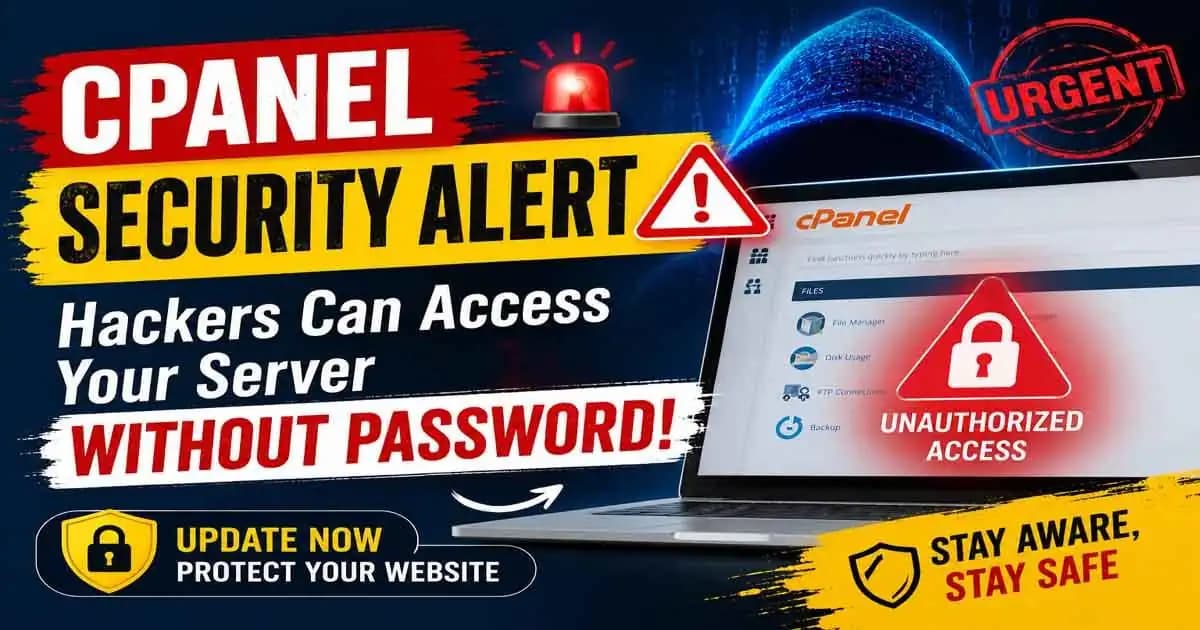
cPanel Security Alert messages are suddenly appearing across hosting communities, cybersecurity forums, and server management discussions after researchers revealed a dangerous vulnerability that may allow attackers to access servers without usernames or passwords. For many website owners, the first sign of trouble may simply be an unfamiliar login session, a strange server slowdown, or unexpected changes inside their hosting dashboard.
For small businesses, bloggers, online stores, and agencies, this situation feels especially worrying because cPanel powers millions of websites around the world. Many users never think about server security until something unusual appears inside their hosting Account.
In recent months, security researchers and hosting providers have been closely monitoring reports connected to a critical cPanel & WHM vulnerability identified as CVE-2026-41940. According to multiple cybersecurity reports, the flaw has already been exploited in real-world attacks before public disclosure, making the situation more serious than a routine software update.
Why So Many Website Owners Are Suddenly Talking About cPanel
For years, cPanel has been one of the most widely used hosting control panels in the world. Website owners rely on it to manage domains, emails, backups, databases, and server settings without needing advanced technical skills.
That convenience is also why attackers pay attention to it.
When a vulnerability affects a platform used by millions of websites, cybercriminals quickly begin searching for unpatched servers. In this case, researchers warned that attackers may be able to bypass authentication entirely under certain conditions.
For many users, the issue became visible after hosting providers started sending urgent update notices or maintenance alerts. Some server administrators also reported unusual login attempts, unfamiliar processes running in the background, or Unexpected changes to hosting configurations.
A typical user experience might look like this:
“Your hosting account requires immediate security maintenance.”
Or:
“Suspicious administrative activity detected on your server.”
For non-technical website owners, Messages like these can be confusing. Some people initially assume they are phishing emails, while others ignore them completely because their websites still appear to work normally.
That delay can become dangerous.
What Makes This Vulnerability Different
CyberSecurity vulnerabilities appear regularly, but this particular cPanel issue has raised concern because researchers believe it may allow unauthorized access without normal authentication.
In simple terms, attackers may not need a valid password to Access vulnerable systems.
If exploited successfully, attackers could potentially gain:
- Administrative or root-level access
- Control over website files
- Access to databases
- Email account visibility
- Ability to inject malicious code
- Opportunity to redirect visitors to scam pages
For businesses Running customer portals, ecommerce stores, or email hosting, the consequences could extend beyond a temporary outage.
Some attackers specifically target hosting environments because compromising one server can sometimes expose multiple websites at once, especially in Shared hosting environments.
The Warning Signs Many Users Miss
One challenge with hosting-related attacks is that the early Warning signs are often subtle.
Website owners sometimes assume small technical issues are routine glitches rather than indicators of unauthorized Access.
Some commonly reported warning signs include:
Unexpected Admin Sessions
Users may notice unfamiliar login sessions inside cPanel or WHM dashboards.
Website Files Suddenly Change
Attackers sometimes inject spam pages, malicious scripts, or Hidden redirect code into website files.
Strange Email Activity
Compromised servers may begin sending spam emails without the owner realizing it.
Server Performance Problems
Websites may become unusually slow due to hidden malware activity running in the background.
Security Warnings From Hosting Providers
Some hosting companies are now proactively notifying customers to update or patch affected systems.
In many cases, users only investigate after visitors report unusual popups, browser Security warnings, or Suspicious redirects.
Why Attackers Target Hosting Servers
Cybercriminals are increasingly focusing on hosting infrastructure because it Offers large-scale opportunities.
Instead of targeting individual users one by one, compromising a hosting server may provide access to:
- Multiple websites
- Customer databases
- Email systems
- Payment portals
- Administrative accounts
This strategy has become more common throughout 2024 and 2025 as attackers shift toward infrastructure-level exploitation rather than basic phishing campaigns alone.
Researchers have also observed that attackers often move quickly after vulnerabilities become public. Automated scanning tools search the internet for outdated servers within hours of disclosure.
That means even smaller websites can become targets simply because they are running unpatched software.
Why Shared Hosting Users Should Not Ignore This
Some website owners assume hosting security is only the provider’s responsibility.
While hosting companies do manage much of the infrastructure, shared hosting users still face risks if vulnerabilities remain unpatched or if Account-level security is weak.
In shared environments, attackers may attempt to exploit one vulnerable system to gain broader server access.
This is why security experts now encourage even non-technical users to:
- Confirm their hosting provider applied security patches
- Use strong account passwords
- Enable two-factor authentication where available
- Monitor website behavior regularly
Many users only discover problems after search engines flag their sites for malware or customers report Suspicious activity.
By that stage, recovery becomes more complicated and expensive.
How Hosting-Related Attacks Have Evolved in 2024–2025
A few years ago, many cyberattacks focused heavily on fake emails and phishing links targeting individual users.
Today, attackers increasingly look for weaknesses in platforms that power thousands or millions of websites at once.
Hosting panels, plugins, cloud dashboards, and server management systems have become attractive targets because they offer broader access.
Security researchers throughout 2024 and 2025 have repeatedly warned that:
- Zero-day vulnerabilities are being exploited faster
- Attack automation has improved
- Smaller businesses are being targeted more often
- Attackers now monetize compromised servers in multiple ways
Some attackers use compromised servers for spam campaigns, while others deploy malware, steal credentials, or create phishing pages hosted on legitimate websites.
Because hosting systems sit at the center of website operations, a single vulnerability can affect multiple services simultaneously.
Simple Steps Website Owners Can Take Right Now
Most website owners are not cybersecurity experts, and they should not need to be.
However, a few basic actions can significantly reduce Exposure.
Update cPanel and WHM Immediately
If you manage your own server, Install the latest security patches as soon as possible.
If you use shared hosting, contact your provider and Confirm updates have been applied.
Review Login Activity
Check for unusual administrator sessions or unfamiliar IP addresses.
Monitor Website Changes
Unexpected file modifications, redirects, or hidden pages should be investigated quickly.
Use Strong Authentication
Enable two-factor authentication wherever possible.
Keep Backups Ready
Recent backups can reduce recovery time if compromise occurs.
Remove Unused Services
Unused plugins, outdated scripts, and unnecessary services increase attack exposure.
Even Simple awareness can make a major difference. Many successful attacks happen because users assume someone else is monitoring security for them.
Why Calm Awareness Matters More Than Panic
Security alerts naturally create anxiety, especially for small business owners who depend on their websites daily.
But cybersecurity professionals often emphasize that awareness and timely action matter far more than panic.
Not every website will be compromised. Not every suspicious email indicates an active attack.
However, ignoring critical updates or assuming “it won’t happen to me” remains one of the most common Reasons attacks succeed.
The recent cPanel vulnerability is another reminder that even trusted platforms can develop serious security flaws. What Matters most is how quickly organizations and users respond once those risks become known.
For website owners, staying informed, keeping systems updated, and paying attention to unusual activity remain some of the most effective defenses available today.
FAQ
What is the cPanel security alert about?
The alert relates to a critical vulnerability affecting cPanel & WHM that may allow attackers to bypass authentication and access servers without valid login credentials.
Can shared hosting users be affected by this vulnerability?
Yes. Shared hosting users may also face risks if their hosting provider has not updated affected systems or if account-level security is weak.
How can I tell if my hosting account was compromised?
Possible warning signs include unfamiliar admin sessions, unusual website changes, unexpected redirects, suspicious emails, or server slowdowns.
Why are hosting platform attacks increasing in 2025?
Cybercriminals increasingly target hosting infrastructure because compromising one server can provide access to multiple websites, databases, and email systems at once.