Suspicious login attempt what to do is a question many people ask the moment they see a security alert on their phone. It might appear as a notification from Google, a banking app, or a social media platform saying that someone tried to sign in from an unfamiliar location or device. For many users, the alert creates instant confusion. Was it just a normal login? Did someone actually try to access the account? And most importantly what should you do next?
In recent months, more Smartphone users have reported receiving login alerts they don’t recognize. Sometimes it’s harmless, like logging in from a new browser. Other times, it may indicate that someone is trying to access the Account without permission.
Understanding how these alerts work and how to respond calmly can help Protect your digital accounts before any real damage occurs.
A Situation Many People Experience on Their Phone
It often begins with a simple notification.
You unlock your phone and see a message like:
“New sign-in detected from Chrome on Windows. Was this you?”
Or perhaps an email appears that says:
“We noticed a suspicious login attempt from a new device.”
Many platforms send these alerts Automatically when a login occurs from a different location, device, or browser.
At first, the Message can be unsettling. Some people Immediately worry that their account has been hacked.
But in reality, there are several possible explanations.
For example:
- Logging into your account from a new phone
- Signing in through a different browser
- Using public Wi-Fi or mobile data
- A system mistakenly flagging normal activity
However, there are also situations where the alert is legitimate meaning someone really is trying to access the Account.
Knowing how to interpret the alert can make all the difference.
Why People Are Seeing More Login Alerts Recently
Over the past year, login Security systems have become more sensitive.
Many platforms such as Google, Apple, Microsoft, banking apps, and Social networks now use automated Security monitoring to detect unusual Activity.
If something about the login attempt looks unfamiliar a different Location, device type, or IP address the system may trigger an alert.
Another reason these alerts are becoming more common is the rise of credential-stuffing attacks.
This Happens when attackers take email and password combinations leaked in previous data breaches and try them across multiple Websites.
Even if the attempt fails, the platform may still notify the user that someone tried to log in.
Security researchers throughout 2025 and 2026 have observed an increase in automated login attempts targeting common online services, especially email, social media, and cloud storage accounts.
These attempts often occur quietly in the background, without the attacker knowing the Account owner is receiving alerts.
Common Reasons You May Receive a Suspicious Login Alert
In many cases, the alert may not actually mean that a hacker Accessed the account.
Modern security systems monitor account activity constantly, and even normal behavior can sometimes trigger an automated Warning.
Some common reasons include:
Logging in From a New Device
Signing in from a new phone, tablet, laptop, or browser can trigger security Verification systems.
For example, logging into Gmail on a Chromebook for the first time may generate a Suspicious login notification even if the activity is legitimate.
Using a VPN or Public Wi-Fi
Virtual private networks and public internet connections can change the visible location of a login attempt.
This may cause platforms to think the account is being accessed from another city or country.
Browser Cookies Were Cleared
Some websites use cookies to remember trusted devices.
If browser data is removed, the next sign-in may appear unfamiliar to the system.
Passwords Leaked in Previous Data Breaches
If an email address appeared in an old data breach, attackers may attempt automated sign-ins using leaked passwords.
Even unsuccessful login attempts can still trigger security alerts.
Syncing Accounts Across Multiple Devices
Users who connect Accounts between phones, tablets, browsers, password managers, and cloud services may occasionally Receive unusual login notifications because multiple systems are Accessing the account at the same time.
Signs the Login Attempt May Not Be From You
Not every login alert means danger, but certain Details can indicate something unusual.
Here are some warning signs worth paying attention to.
What To Do Immediately After a Suspicious Login Attempt
If you believe the login attempt may be genuine, taking quick action can help protect the account before further activity occurs.
Here are the most important steps security experts recommend.
Change Your Password Immediately
Create a new password that is strong, unique, and not reused on other websites.
Avoid simple combinations or passwords connected to Personal information.
Enable Two-Factor Authentication
Two-factor authentication adds another layer of protection by requiring a verification code during sign-in.
Even if someone knows the password, they may still be unable to access the account.
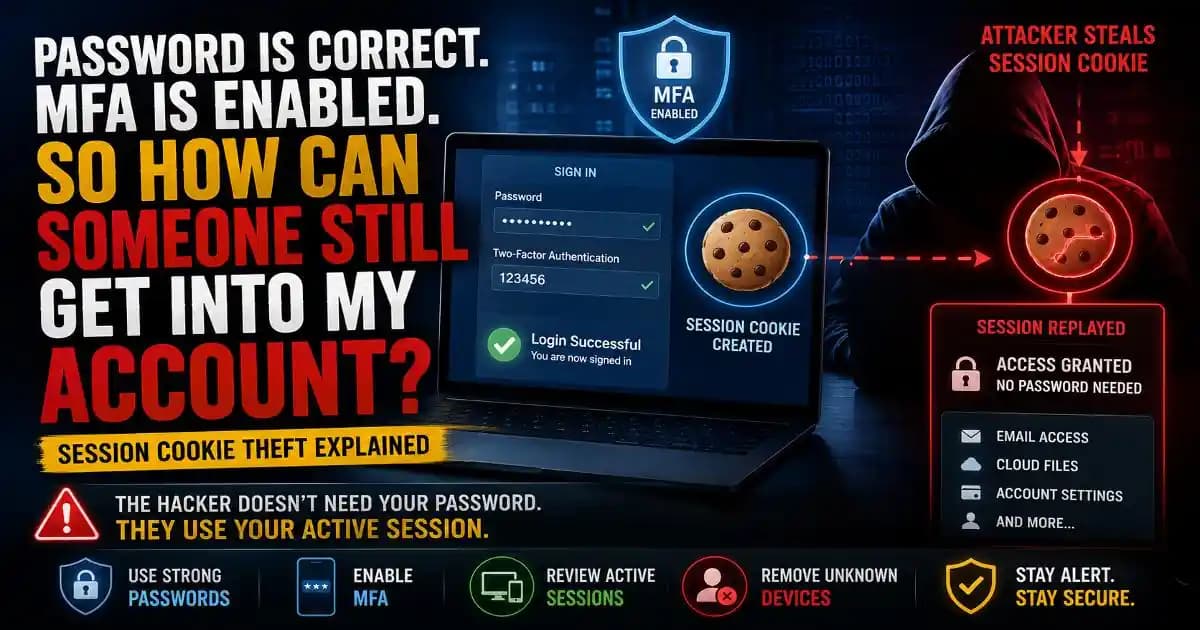
Review Active Devices and Sessions
Many platforms allow users to see which devices are currently signed into the account.
Look for:
- unfamiliar devices
- unknown locations
- browsers you do not recognize
If anything looks suspicious, sign out of all sessions Immediately.
Check Recovery Email and Phone Numbers
Attackers sometimes change recovery information after accessing an account.
Users Should confirm that recovery details still belong to them.
Scan Devices for Malware
If suspicious activity continues, the issue may involve malware or malicious browser extensions Installed on the device.
Running a trusted security scan can help identify Hidden threats.
How to Tell if a Suspicious Login Alert Is Real or Fake
Not every security notification is genuine.
Cybercriminals sometimes send fake login alerts designed to scare users into clicking malicious links or entering passwords on phishing websites.
Because of this, it is important to carefully check whether the alert actually came from the official platform.
Here are some common signs that the alert may be fake.
The Email Address Looks Suspicious
Real security alerts from companies like Google, Apple, or Microsoft usually come from official domains.
For example:
- @google.com
- @apple.com
- @microsoft.com
If the sender address contains strange characters, random numbers, or misspellings, the Message may be fraudulent.
The Message Creates Panic or Urgency
Fake alerts often use alarming language such as:
- “Your account will be deleted immediately”
- “Verify now or lose access”
- “Security breach detected”
Their goal is to pressure users into reacting without thinking carefully.
The Login Link Looks Unusual
Before clicking any link, users should check the destination carefully.
Official login pages normally use secure domains and HTTPS encryption.
If the website address looks unfamiliar or contains extra words, it may be a phishing attempt.
The Alert Requests Sensitive Information
Legitimate security notifications usually ask users to sign in Through the official app or website.
They do not ask for passwords, bank details, or verification codes directly through email messages.
When in doubt, it is safer to open the official app manually instead of clicking links from the alert itself.
A Login From a Location You Don’t Recognize
Most alerts mention the approximate location of the login attempt.
For example:
“Sign-in attempt from Moscow, Russia.”
or
“New login detected from another country.”
If the location is somewhere you have never visited or used a VPN from, it may be worth taking the alert seriously.
A Device You Do Not Own
Security alerts often include the device type used for the login attempt.
Examples include:
- Chrome on Windows
- iPhone Safari
- Android device
- Unknown browser
If the device listed is something you do not own or use, it may indicate an unauthorized attempt.
Multiple Login Alerts in a Short Time
Sometimes users receive several login notifications within minutes or hours.
For example:
“Login attempt blocked.”
followed by
“Another sign-in attempt detected.”
This pattern can suggest automated login attempts.
Attackers often use software that tries multiple passwords quickly, hoping one will work.
Password Reset Requests You Didn’t Initiate
Another sign of possible account targeting is receiving password reset emails or OTP verification codes you did not request.
Messages like:
“Your password reset code is 492871.”
can appear if someone is trying to reset your account password.
Even if they cannot access the account, repeated reset requests are a sign someone may be trying.
Why These Attempts Can Be Dangerous
In many cases, Suspicious login attempts fail because the attacker guesses the wrong password.
However, the real risk comes when accounts use weak passwords or the same password across multiple sites.
If a password was exposed in a past data breach, attackers may already have access to it.
Once inside an account, they may attempt to:
- Change the password
- Access personal messages
- Use saved payment details
- Send scams to contacts
- Collect personal information
Email accounts are particularly valuable targets because they often allow attackers to reset passwords for other services.
That’s why login alerts should never be ignored even if they turn out to be harmless.
How Login Attacks Have Changed in 2024–2025
A few years ago, account hacking attempts were often manual and easy to detect.
Today, most login attempts are automated.
Attackers use software that can test thousands of username and password combinations across different websites.
This process, known as credential stuffing, relies on passwords leaked from past breaches.
Another recent trend observed in 2024 and 2025 is attackers attempting logins slowly over time instead of all at once.
This method is designed to avoid triggering security systems.
Some attackers also attempt logins from locations close to the user’s region to appear less suspicious.
Because of these evolving tactics, many platforms now send alerts even when login attempts fail.
This early warning system helps users act before accounts are compromised.
What You Should Do When You Receive a Suspicious Login Alert
If you see a login alert that you do not recognize, there are a few simple steps that can help protect your account.
First, Do Not Panic
Many alerts are triggered by harmless activity, such as signing in from a new browser.
Take a moment to check the details of the alert before assuming the worst.
Check Your Recent Account Activity
Most platforms provide a “recent activity” or “security activity” page where you can see where your account was accessed.
Look for:
- Unknown devices
- Unrecognized locations
- Activity you do not remember
If everything looks familiar, the alert may have been triggered by normal activity.
Change Your Password Immediately
If the login attempt does not look familiar, changing your password is a good precaution.
Create a password that:
- Is long and unique
- Uses a mix of characters
- Is not reused on other websites
Avoid simple patterns or predictable phrases.
Enable Two-Factor Authentication
Two-factor authentication (2FA) adds another layer of protection.
Even if someone knows your password, they cannot log in without the verification code sent to your phone or authentication app.
Many account takeovers fail because this feature is enabled.
Review Connected Devices and Sessions
Some platforms allow users to log out of all active sessions.
If you suspect unauthorized access, logging out of all devices ensures any unknown sessions are removed.
Can a Suspicious Login Alert Be a False Alarm?
Yes, security alerts can sometimes be false alarms.
Automated systems are designed to detect unusual behavior quickly, but they do not always understand the full context of a user’s activity.
For example:
- traveling to another city
- switching internet providers
- signing in from a hotel Wi-Fi network
- using a VPN
- changing devices
can all trigger warnings even when the login is legitimate.
This is why users should review the details carefully instead of assuming the account has definitely been hacked.
However, repeated alerts from unknown locations or unfamiliar devices should never be ignored.
The Calm Approach That Keeps Accounts Safe
Receiving a login alert can feel unsettling, especially if it appears late at night or while you are not actively using your account.
But in most situations, these alerts are part of the security systems designed to protect users.
The key is not to ignore them.
A quick check of your account activity, a password update, and enabling two-factor authentication can significantly reduce risk.
Digital accounts are now part of everyday life from messaging apps to banking services. Small security habits, like responding calmly to login alerts, help keep those accounts protected.
Sometimes the alert simply confirms that your account security is working exactly as it should.
Frequently Asked Questions
What does a suspicious login attempt mean?
A suspicious login attempt usually means the platform detected a login from an unfamiliar location, device, or browser. It does not always mean the account was hacked, but it indicates unusual activity.
Should I change my password after a suspicious login alert?
If you do not recognize the login attempt, changing your password is recommended. This prevents anyone who might know your password from accessing the account.
Can someone log into my account without my password?
In most cases, attackers need your password. However, phishing scams, malware, or previously leaked passwords can sometimes give them access.
Why do I get login alerts from locations I’ve never visited?
Location data in login alerts is based on IP address estimates, which are not always precise. However, if the location is completely unfamiliar, it is safer to review your account security and change your password.