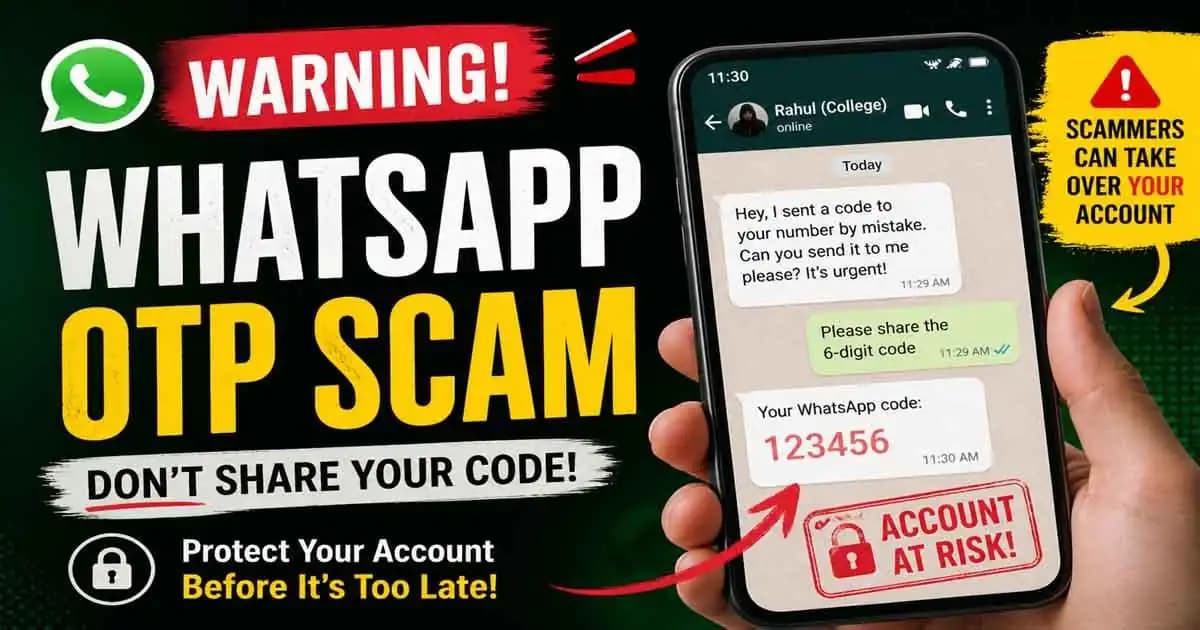
WhatsApp OTP Scam is becoming a common experience for everyday users who suddenly receive a message asking for a verification code often from someone they know without realizing it could lead to losing their account within minutes.
It usually starts in a very normal way.
You get a Message from a friend, colleague, or even a family member. They say something like:
“Hey, I accidentally sent a WhatsApp code to your number. Can you share it with me?”
At first, it doesn’t feel suspicious. The person seems familiar. The Request sounds harmless.
But this is exactly where many users get caught off guard.
A Situation Many People Are Facing Recently
Imagine this.
You’re going about your day when your phone receives a WhatsApp Verification code (OTP). You didn’t request it, so you ignore it.
A few seconds later, someone you know Message (1)s you urgently:
“Please send me the code you just received. It’s important.”
Because it’s coming from someone you trust, you might not think twice. You share the code.
Within moments, your WhatsApp (1) logs out. You try to log back in but you can’t.
What just happened?
This is how a typical WhatsApp OTP scam works.
Why Are So Many Users Seeing These Messages Now?
Over the past few months especially Throughout 2025 and into 2026, there has been a noticeable increase in these types of scams.
The reason is simple: attackers are no longer relying on random messages. They are using social engineering manipulating trust.
Here’s how it usually unfolds:
- A scammer gains access to one person’s WhatsApp account
- They then message everyone in that person’s contact list
- Each message looks genuine because it comes from a real account
This creates a chain reaction.
One compromised account can quickly lead to many more.
And because WhatsApp is widely used for daily communication, people tend to trust Messages without questioning them too much.
Warning Signs You Should Not Ignore
The tricky part about the WhatsApp OTP scam is that it doesn’t always look like a scam.
But there are some clear signals you can watch for:
1. Unexpected OTP Requests
If you Receive a Verification code without Requesting it, something is wrong.
2. Urgent Messages from Contacts
Scammers often create urgency:
“Please send it fast”
“It’s urgent”
This is meant to stop you from thinking carefully.
3. Slightly Unusual Language
Even if the Message comes from someone you know, the tone may feel slightly off.
4. Requests That Don’t Make Sense
Why would someone need a code sent to your number?
That alone should raise suspicion.
Why This Scam Can Be More Serious Than It Looks
At first glance, it may seem like a simple trick.
But the consequences can be much bigger.
Once scammers gain Access to your WhatsApp Account, they can:
- Message your contacts pretending to be you
- Attempt financial scams using your identity
- Access private conversations
- Lock you out completely
In some cases, users have reported that scammers demanded money from their Contacts using emotional stories like:
“I’m in trouble, please send money urgently.”
Because the message comes from a known number, people are more likely to believe it.
How This Scam Has Evolved in 2025-2026
Earlier scams were easier to spot.
They came from unknown numbers or contained obvious red flags.
But now, things have changed.
Scammers are focusing more on:
- Trust-based attacks using hacked accounts
- Short, believable messages instead of long suspicious texts
- Real-time interaction to create urgency
They don’t rely on links anymore in many cases.
Just a simple request for an OTP is enough.
This shift has made the scam more effective and harder to detect.
Simple Ways to Protect Yourself
The good news is that avoiding this scam doesn’t require technical knowledge.
It’s mostly about awareness.
Never Share Your OTP
No matter who asks even if it’s someone you trust never share your WhatsApp verification code.
WhatsApp itself clearly states that this code Should never be shared.
Pause Before Responding
If a message feels urgent, take a moment.
Scammers rely on quick reactions.
Confirm Through Another Method
If a friend asks for something unusual, call them directly.
A quick call can prevent a big problem.
Enable Two-Step Verification
This adds an extra layer of Security to your WhatsApp account.
Even if someone gets your OTP, they won’t be able to access your account easily.
Be Aware of Sudden Behavior Changes
If a contact Suddenly starts Asking for unusual things, it could mean their account has been compromised.
What If You Already Shared the Code?
If you’ve already shared your OTP, don’t panic but act quickly.
Try to log back into your WhatsApp immediately.
If you still have access, enable two-step verification right away.
If you’re locked out:
- Use WhatsApp’s account recovery process
- Inform your contacts not to trust messages from your account
- Avoid further interaction with the scammer
Acting quickly can limit the damage.
A Final Thought
The WhatsApp OTP scam doesn’t rely on advanced hacking.
It relies on something much simpler-trust.
That’s what makes it effective.
Most people don’t expect a scam to come from someone they know.
But in today’s digital world, even trusted Accounts can be misused.
Staying safe doesn’t mean being fearful it means being aware.
A small pause Before sharing something can make all the difference.
Frequently Asked Questions (FAQs)
1. Can someone access my WhatsApp just with OTP?
Yes. If you share your OTP, scammers can log into your WhatsApp account and take control of it.
2. Why did I receive a WhatsApp verification code without requesting it?
This usually means someone is trying to register your number on another device or attempting to access your account.
3. Is WhatsApp OTP scam common in 2026?
Yes, reports of WhatsApp OTP scams have increased significantly in 2025–2026, especially involving Hacked accounts messaging known contacts.
4. How can I make my WhatsApp more secure?
Enable two-step verification, never share OTP codes, and always verify unusual requests before responding.