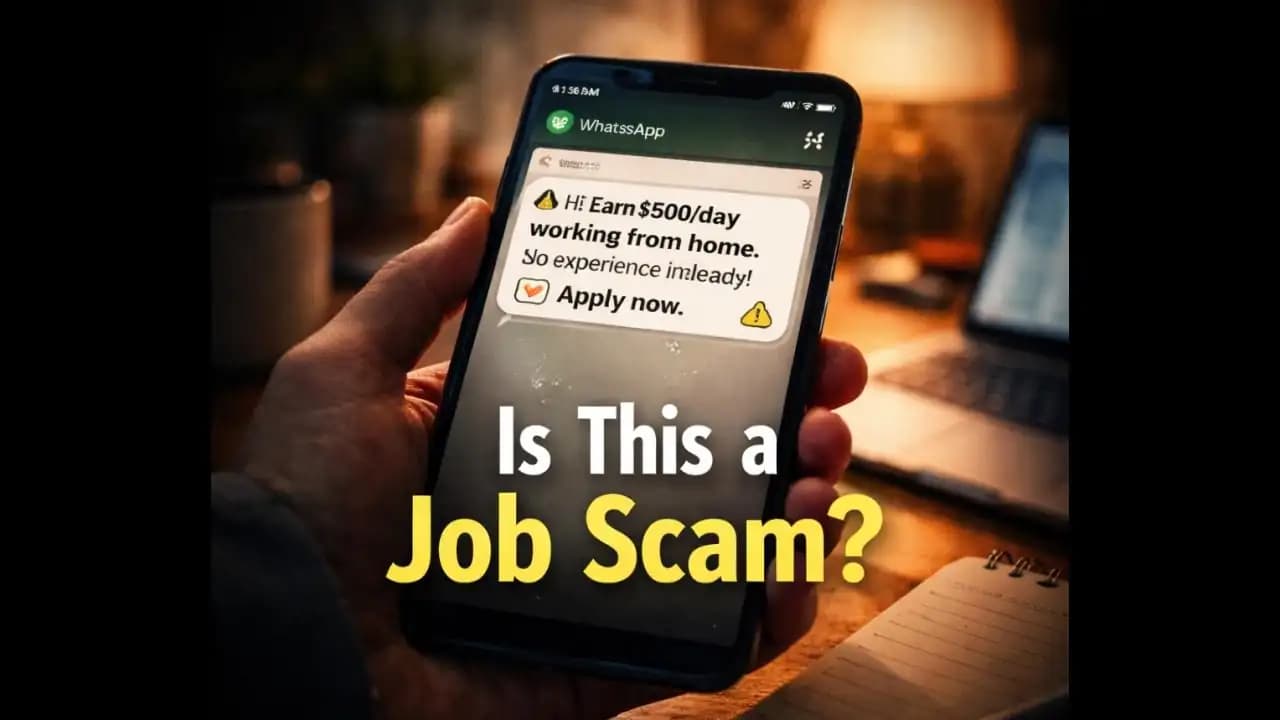
Job offer scam message alerts are appearing more frequently on phones, often arriving through WhatsApp, Telegram, or SMS with promises of flexible work and easy money. The message usually sounds friendly and professional, claiming that a company found your number through a job platform and wants to offer you a simple online job. For many people searching for extra income, the opportunity seems worth exploring but in reality, these messages are often part of a growing online fraud trend.
Over the past year, thousands of smartphone users have reported receiving these Unexpected job offers. At first glance they look harmless. But once a conversation begins, the situation can slowly turn into a sophisticated scam.
Understanding how these Messages work can help you recognize the warning signs before any damage is done.
A Situation Many Smartphone Users Recognize
Imagine checking your phone on a normal weekday afternoon. A Message arrives from an unfamiliar number on WhatsApp.
It might say something like this:
“Hello. We are recruiting part-time remote workers. Work from home and earn ₹3,000–₹8,000 daily. No experience needed.”
Or:
“Our company found your contact through a job database. We are offering simple Online tasks with good payment.”
Sometimes the Message (1) includes a company name or a logo. Other times it simply introduces a “recruitment manager.”
At first, the offer feels appealing especially if the job sounds Simple. The tasks often involve Things like:
- Reviewing products
- Clicking links
- Liking videos
- Completing small online tasks
The Message may even promise instant payment through digital wallets.
Because the conversation begins casually, many People respond just to learn more. And that is exactly what the scam relies on.
Why These Messages Are Appearing More Frequently
In recent months, reports of fake job offers through Messaging apps have grown significantly.
One reason is simple: messaging platforms make it easy for Scammers to contact Thousands of people quickly.
Unlike email spam, which many users ignore, a Message on WhatsApp or SMS often feels more personal. It appears alongside real conversations with friends, family, and coworkers.
Scammers also know that many people are actively searching for flexible work opportunities.
Remote work, part-time gigs, and online freelancing have become increasingly popular. Fraudsters exploit this interest by sending Messages that sound like legitimate recruitment offers.
Some scam operations even use automated systems to send thousands of messages per day, targeting people across multiple countries.
Once a few people respond, the scammers begin the next stage of the scheme.
How the Conversation Usually Unfolds
These scams rarely ask for money Immediately. Instead, they slowly build trust.
After you respond to the initial message, the “recruiter” usually explains the job in more detail.
They may say something like:
“Your task is to help boost product visibility online. You will simply rate or review items.”
The tasks initially seem easy and harmless.
Sometimes the scammer even pays a small amount for the first task perhaps a few dollars or a small digital transfer. This tactic is intentional.
It creates the impression that the job is legitimate.
Once trust is established, the next step begins.
The victim may be told they need to deposit money to unlock higher-paying tasks or upgrade their Account.
At that point, the situation changes from a job opportunity to a financial trap.
Warning Signs That a Job Offer Message Is Suspicious
Many of these scams follow similar patterns. Recognizing the Warning signs can help you Identify them early.
The job offer arrives unexpectedly
Most legitimate employers do not randomly message people on WhatsApp or SMS with job offers.
If you did not apply for a role or share your contact information with the company, the message deserves extra scrutiny.
The pay sounds unusually high for simple work
Many scam messages promise earnings that seem too good to be true.
Examples include:
- “Earn ₹5,000 daily from home.”
- “Make money by liking videos.”
- “Simple tasks with guaranteed payment.”
Real jobs rarely offer high pay for extremely simple tasks without an interview or Verification process.
The recruiter refuses to provide clear company details
If you ask questions about the company, scammers often respond vaguely.
They may provide:
- Generic company names
- Links that lead to unrelated websites
- Poorly written explanations
Legitimate recruiters usually provide clear information about their company, role, and hiring process.
You are asked to send money first
One of the most common warning signs is a Request to deposit money before receiving work.
Scammers may claim the payment is required for:
- Task activation
- Training access
- Platform registration
- Account upgrades
A real employer will never ask job applicants to pay in order to start working.
Why These Scams Can Be Financially Dangerous
At first, the job offer scam message might seem harmless. But the financial risks can escalate quickly.
Once a victim pays the first deposit, the scammers often introduce additional fees.
For example:
- “Complete the next task by depositing ₹2,000.”
- “Upgrade your account to access higher-paying jobs.”
- “Withdraw your earnings after completing one more task.”
Each step requires another payment.
Because the victim already invested money, they may continue paying in the hope of recovering their earnings.
Unfortunately, the promised payments rarely arrive.
In many cases, the scammers eventually stop responding once the payments stop.
Some victims report losing hundreds or even thousands of dollars through these schemes.
How Fake Job Offer Scams Have Evolved in 2024–2025
Over the past few years, job scams have become more organized and sophisticated.
Earlier scams often relied on simple email messages that were easy to identify as fraudulent.
However, trends observed during 2024 and 2025 show a shift toward messaging apps.
Scammers now use platforms such as:
- Telegram
- SMS
- Instagram messages
These platforms allow them to create conversations that feel informal and personal.
Another change is the use of realistic scripts. Many scammers now follow structured conversation templates designed to build trust gradually.
Some operations even simulate customer support teams or payment dashboards to make the fake job platform appear legitimate.
Because of these improvements, the scams can appear Convincing especially to people who are actively searching for work.
Simple Ways to Protect Yourself
While these scams are becoming more common, a few simple habits can help reduce the risk.
Be cautious with unexpected job messages
If a job offer arrives out of nowhere through WhatsApp or SMS, treat it with skepticism.
Legitimate employers usually contact candidates through official job platforms or email.
Research the company independently
If the message includes a company name, search for it online.
Look for an official website, verified Social Media pages, or legitimate job listings.
If you cannot find reliable information, the offer may not be genuine.
Never pay money to start a job
This is one of the most important rules.
Real employers pay workers they do not ask for deposits to begin working.
Any request for upfront payment Should be treated as a major red flag.
Trust your instincts
If the conversation feels rushed, vague, or overly persuasive, take a step back.
Scammers often rely on excitement or urgency to keep victims engaged.
Pausing to Verify the opportunity can prevent costly mistakes.
A Simple Habit That Can Prevent Many Scams
In today’s digital world, opportunities and scams can arrive through the same device in your pocket.
The job offer scam message works because it taps into something many people genuinely want: flexible work and extra income.
But legitimate opportunities rarely appear out of nowhere through messaging apps.
When an unexpected job offer appears on Your Phone, the safest response is simple: pause, verify, and avoid sharing personal or financial information until you are absolutely certain the opportunity is real.
A few extra minutes of caution can save months of financial stress.
Frequently Asked Questions
Why do scammers send job offers through WhatsApp or SMS?
Messaging apps allow scammers to contact large numbers of people quickly. These messages also feel more personal than emails, which increases the chances that someone will respond.
Are all job offers sent through messaging apps scams?
Not necessarily, but unexpected job offers from unknown numbers should always be verified carefully. Legitimate recruiters typically use official company email addresses and formal hiring processes.
What should I do if I replied to a job scam message?
If you only replied without sharing personal or financial information, you can simply block the number. If you shared sensitive information or sent money, contact your bank and report the incident.
How can I verify whether a job offer is legitimate?
Search for the company online, check official job listings, and confirm the recruiter’s identity through the company’s website or professional platforms like LinkedIn. Legitimate employers will always provide verifiable information.