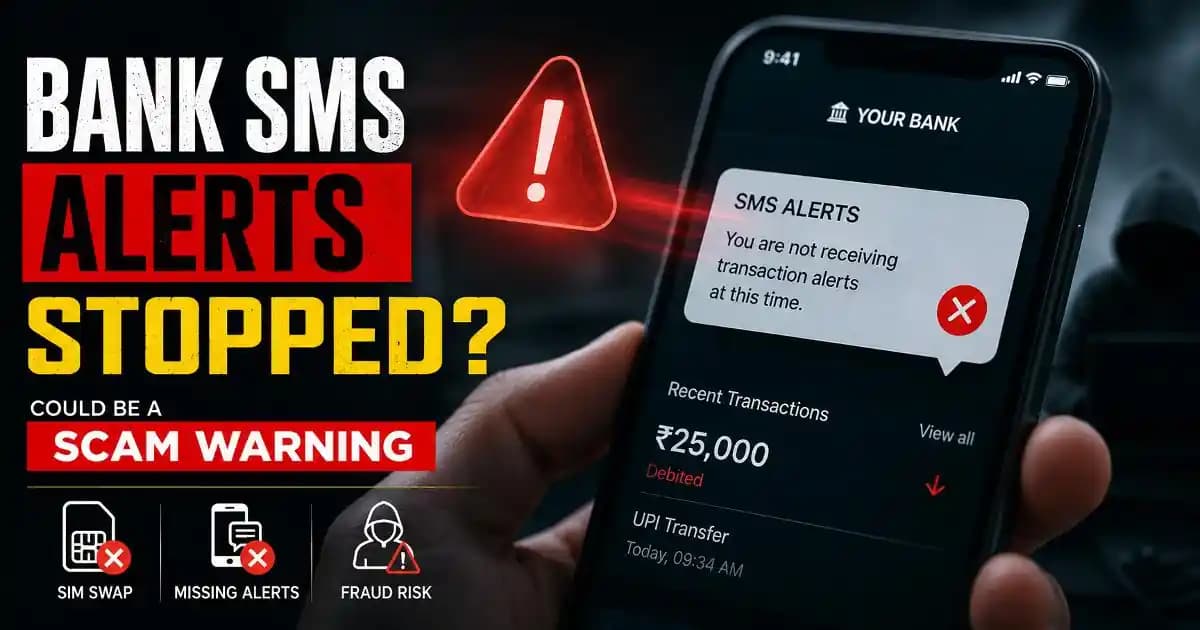
Bank SMS alerts stopped scam searches have increased because many users only realize something is wrong after unauthorized transactions appear without any warning notification on their phone.
For years, banking SMS alerts acted like a quiet safety layer in digital finance. Even people who rarely opened their banking app still relied on transaction messages to notice suspicious withdrawals, card usage, login attempts, or UPI activity. That habit became deeply tied to how users understood financial Security on smartphones.
Now the experience is changing.
Some users Suddenly stop receiving alerts for hours. Others notice that OTPs arrive late while promotional messages continue normally. In more serious situations, customers discover that alerts disappeared shortly before fraudulent transfers, card purchases, or account takeovers occurred.
The missing SMS itself is not always the fraud. But in many modern scams, the interruption of alerts creates confusion, delays user response, and gives attackers valuable time.
Why bank SMS alerts suddenly stop before fraud cases
Modern banking systems depend on several connected layers that most users never see. A banking SMS does not move directly from the bank to a phone in a simple line. The process may involve telecom providers, messaging gateways, SIM registration systems, spam filtering tools, Android or iPhone notification Permissions, and cloud-based communication platforms.
When any part of that chain breaks, alerts can disappear.
Scammers understand this behavior better than many users do. Instead of attacking only bank passwords, some fraud operations now focus on weakening the communication layer around the Account.
That is important because delayed awareness often Matters more than the original breach itself.
If a criminal gains temporary access to an Account but the victim Immediately sees a debit SMS, the fraud window becomes smaller. But if alerts stop arriving, confusion increases. Users may assume the bank server is temporarily down, the telecom network is unstable, or the phone itself has a notification issue.
That delay gives attackers more time to move money Through mule Accounts, crypto exchanges, prepaid wallets, or layered transfer systems.
SIM swap scams remain one of the biggest risks
One of the most common explanations Behind disappearing alerts is SIM-related fraud.
In a SIM swap attack, criminals attempt to transfer a victim's Mobile number onto another SIM card controlled by the attacker. This may happen through Social engineering, fake identity Verification, leaked customer data, or fraudulent telecom Requests.
Once the number moves, banking SMS alerts and OTP Messages begin arriving on the attacker's device instead of the victim's phone.
What makes these scams Dangerous is that the early signs often look harmless.
- Sudden network signal loss
- Calls failing unexpectedly
- No incoming SMS messages
- Mobile data disconnecting
- Bank notifications disappearing
Many users restart their phone and wait for the signal to return, not realizing the number itself may already be compromised.
During that period, attackers may reset passwords, bypass account recovery systems, approve transactions, or register new devices for banking Access.
Telecom providers and banks have improved protections over the years, but SIM-based fraud still Appears in multiple regions because phone numbers remain deeply connected to identity Verification systems.
Notification permissions and banking app behavior also matter
Not every missing alert is caused by direct telecom fraud. Smartphone operating systems now aggressively manage notifications, battery optimization, and Background app Activity.
That creates a different problem.
Some users think their bank stopped sending Messages when the issue actually comes from:
- Disabled SMS permissions
- Battery saver restrictions
- Spam filtering apps
- Third-party messaging apps
- Android notification optimization
- Blocked short-code messages
- Dual SIM routing confusion
Fraudsters sometimes exploit this confusion through social engineering.
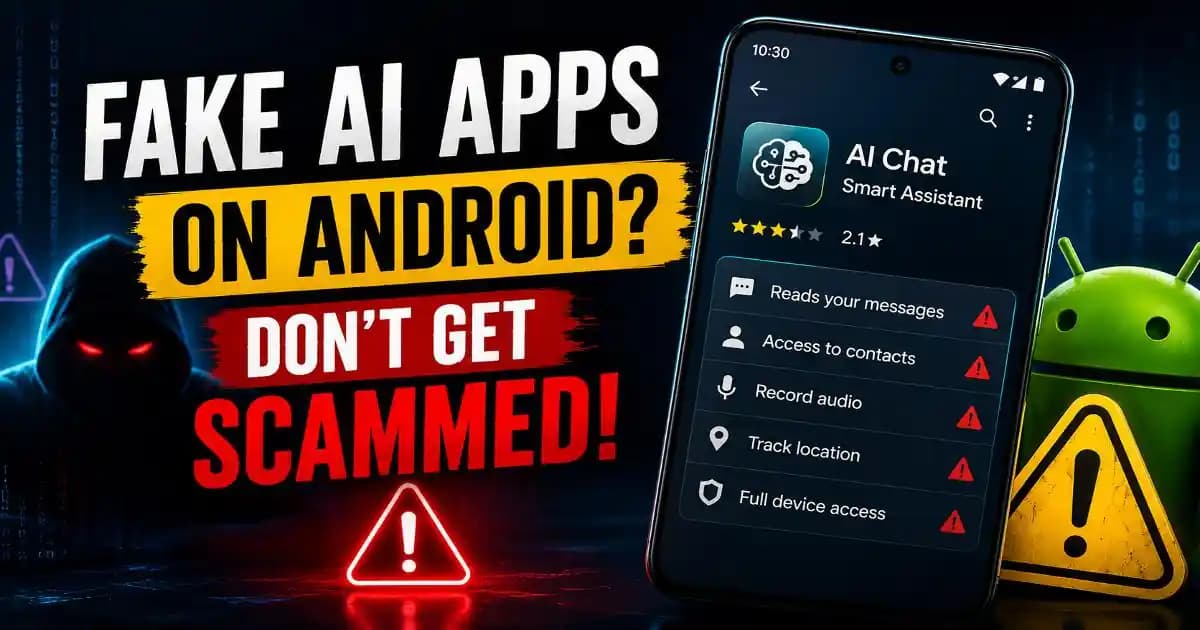
For example, a fake support caller may convince a user to Install a “Security app” or “bank verification tool” that silently requests SMS access Permissions. Once granted, malicious apps can monitor OTP messages, hide alerts, or forward sensitive information remotely.
On Android devices especially, malware targeting accessibility permissions has evolved significantly during recent years. Some malicious applications can overlay fake login screens, intercept notifications, or manipulate device interactions in ways ordinary users rarely expect.
This is one reason cybersecurity researchers increasingly emphasize mobile permission awareness instead of focusing only on passwords.
Why scammers benefit when users trust SMS too much
Banking SMS alerts became psychologically important because they feel immediate and personal. A vibration or notification sound creates a sense of real-time visibility into account activity.
Scammers understand that dependency.
Ironically, the stronger the habit becomes, the easier it is to exploit confusion when alerts disappear.
Some fraud operations intentionally create panic around missing alerts. Users may receive phishing emails or fake support calls claiming that “SMS verification failed” or “account alerts are suspended.” The goal is often to push victims into revealing credentials or approving fraudulent actions themselves.
This reflects a larger shift happening across digital fraud ecosystems during 2025 and 2026.
Attackers are no longer targeting only passwords. They increasingly target user behavior, notification systems, recovery channels, and communication trust.
In many scams, the manipulation of perception becomes more valuable than technical hacking.
Banking ecosystems are slowly moving beyond SMS
Financial institutions already know SMS has limitations.
Text messaging was originally designed for convenience, not as a high-security authentication framework. SMS messages can face delivery delays, telecom routing issues, spoofing risks, and device-level interception.
That is why many banks are gradually shifting toward:
- In-app transaction alerts
- Push notification authentication
- Device binding systems
- Behavioral fraud monitoring
- Biometric verification
- App-based approval flows
Large technology ecosystems including Google and Apple have also pushed stronger device security standards that reduce dependence on traditional SMS verification.
Still, SMS remains widely used because it works across nearly every phone model and telecom network. For millions of users, especially in mobile-first economies, banking SMS alerts are still the fastest way to monitor account activity.
That means attackers will likely continue targeting weaknesses around mobile communication channels.
What users should check when banking alerts suddenly stop
Users often make one critical mistake: waiting too long Before investigating missing banking notifications.
If bank SMS alerts Suddenly stop while the rest of the phone appears normal, it is worth checking several things immediately.
- Verify whether mobile signal or SIM functionality changed unexpectedly.
- Check if the banking app still shows normal login history and linked devices.
- Review recent app installations and SMS permissions.
- Confirm that notification settings were not disabled automatically.
- Look for suspicious emails or calls claiming account verification problems.
- Contact the bank directly through official channels if transactions appear unusual.
Users Should also remember that fraud activity may begin before money actually disappears. Attackers sometimes test cards with small transactions, attempt silent logins, or probe recovery systems first.
Missing alerts can therefore act as an early Warning sign rather than proof of compromise.
The future of banking fraud is becoming more behavioral
The broader issue behind disappearing bank SMS alerts is not only technical security. It reflects how digital trust itself is changing.
People now manage money through dozens of connected systems: smartphones, telecom providers, cloud platforms, payment apps, QR systems, browser sessions, and AI-powered support tools. Every additional layer creates convenience, but also introduces new forms of dependency.
Scammers increasingly study those dependencies.
Instead of brute-force attacks, many modern fraud schemes focus on manipulating user expectations. Delayed notifications, fake urgency, cloned banking interfaces, Impersonation calls, and permission abuse all work because users rely heavily on predictable digital behavior.
When that behavior suddenly changes, confusion becomes part of the attack surface.
That is why cybersecurity awareness today is less about memorizing technical terms and more about recognizing abnormal patterns.
Sometimes the most important warning sign is not a suspicious transaction itself. It is the silence before it.