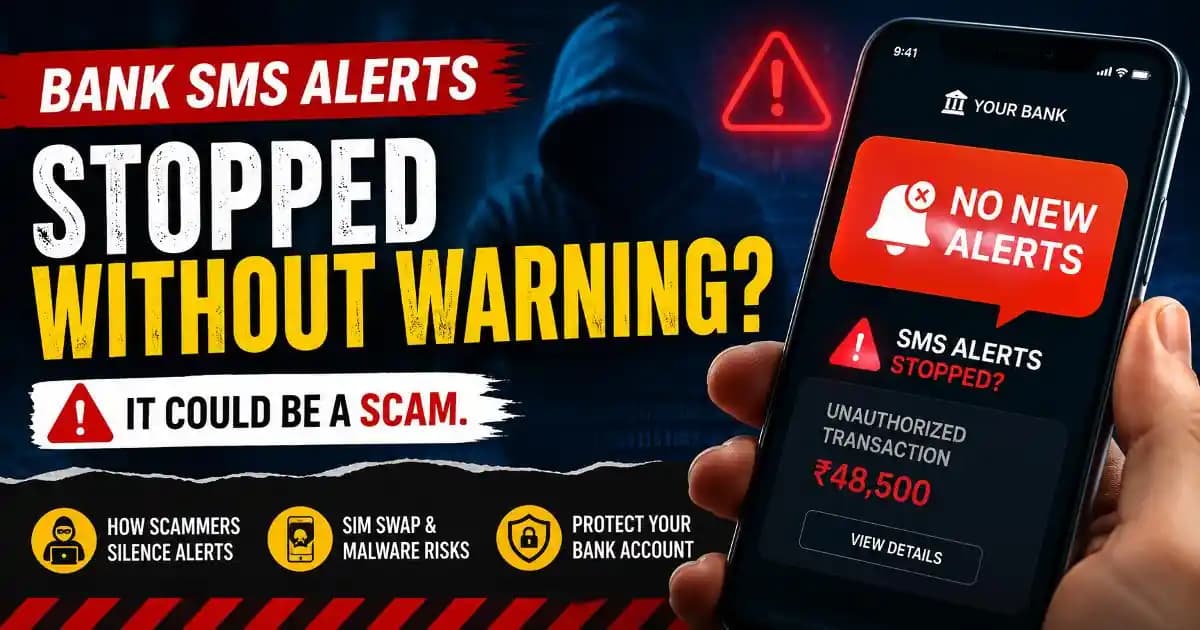
Bank SMS alerts stopped scam reports are becoming more common as victims discover unauthorized transactions only after money has already disappeared from their accounts. In many cases, the missing banking notification itself turns out to be the first sign that something inside the user’s digital ecosystem has already been compromised.
For years, people treated bank SMS alerts as a reliable Security layer. A message arrives instantly after a purchase, withdrawal, login attempt, or balance change. The system feels automatic and dependable. But modern fraud operations increasingly target the notification layer itself before attempting financial theft.
That shift reflects how scams changed during 2025 and 2026. Criminals are no longer focused only on passwords or OTP interception. They now study the entire communication chain around a banking account, including SIM cards, notification permissions, spam filtering systems, telecom behavior, cloud synchronization, and even the way modern smartphones prioritize alerts.
Why Missing Bank Notifications Matter More Than Users Realize
Most users notice missing bank alerts only after suspicious activity appears. A debit card purchase shows up later in the app. An auto-debit Suddenly appears. Sometimes the first discovery happens when the account balance looks wrong.
What makes this Dangerous is that many fraud systems rely on delaying user awareness. The longer a victim remains unaware, the more time attackers have to move funds, chain transactions, purchase digital goods, or exploit linked financial services.
Historically, SMS alerts acted like a real-time intrusion alarm. Even if a card was compromised, the user could Immediately freeze the Account. But when alerts disappear, attackers gain silence. That silence creates valuable time.
Several banking fraud investigations now show patterns where users lose SMS visibility shortly Before unauthorized transactions begin. Sometimes alerts stop completely. In other cases, only specific categories of Messages disappear.
The situation becomes more confusing because banks themselves are not always directly at fault. The interruption may happen anywhere across a complicated ecosystem involving:
- Telecom carriers
- Android or iPhone notification settings
- Spam filtering apps
- SIM replacement fraud
- Malware with SMS permissions
- Cloud-based messaging synchronization
- Battery optimization systems
- Third-party security apps
How Modern Fraudsters Silence Banking Alerts
One of the biggest changes in Mobile fraud is that attackers increasingly exploit behavioral trust rather than pure technical hacking. They know users assume missing SMS alerts are temporary network problems.
That assumption gives fraudsters room to operate quietly.
SIM Swap and SIM Hijacking
SIM swap fraud remains one of the most damaging causes of disappearing banking alerts. Attackers convince telecom providers to transfer a victim’s mobile number onto another SIM card. Once completed, banking SMS messages begin arriving on the attacker’s device instead.
Victims often first notice:
- Sudden signal loss
- “No service” warnings
- Mobile data disconnects
- SMS delivery failures
But many users restart their phones and continue their day, assuming it is a temporary network issue. During that time, attackers may reset passwords, intercept OTP codes, and authorize transfers.
As digital banking systems became more dependent on mobile numbers for identity Verification, SIM ownership effectively became part of financial authentication infrastructure.
Notification Permission Abuse
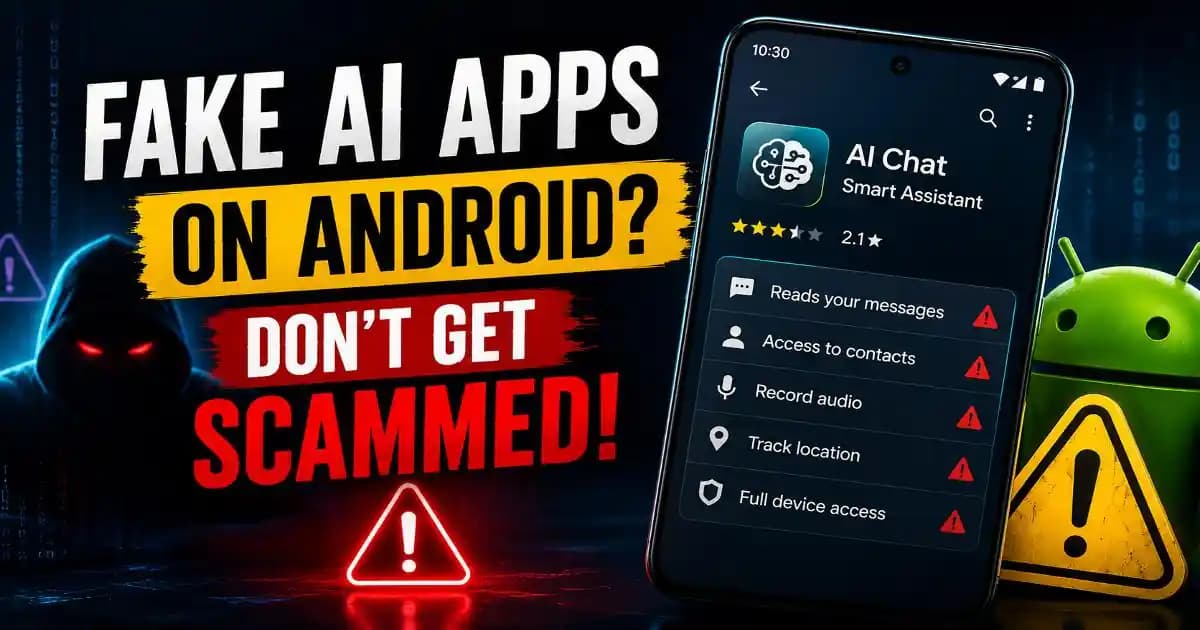
Modern Android malware increasingly requests notification Access rather than traditional SMS Permissions. That matters because notification access allows malicious apps to read alerts from banking applications directly.
Some malware strains can:
- Hide notifications
- Dismiss alerts automatically
- Read OTP codes
- Overlay fake banking screens
- Silence transaction warnings
Users often Install these apps Through fake utility tools, modified APK files, unofficial streaming apps, or counterfeit productivity software.
The danger is amplified because notification Permissions appear less Suspicious than full SMS access. Many users grant them without understanding the consequences.
Spam Filtering Systems Gone Wrong
Banks increasingly rely on automated messaging infrastructure that sometimes collides with aggressive spam filtering tools built into Android devices, telecom systems, and third-party apps.
AI-driven spam filters can incorrectly classify legitimate banking alerts as promotional or suspicious content. Some users later discover their transaction messages sitting silently inside filtered folders for days.
This problem became more noticeable as smartphone operating systems introduced stronger automated notification management during 2025 and 2026.
In some cases, users accidentally train these systems themselves by dismissing or muting repetitive banking messages over time.
The Hidden Role of Cloud Synchronization
Cloud-connected messaging ecosystems have introduced another layer of complexity. SMS messages now move across tablets, laptops, watches, backup systems, and synchronized messaging platforms.
That convenience creates new visibility problems.
Some users mistakenly believe their alerts stopped entirely when messages are actually being redirected to secondary devices or archived inside cloud messaging environments. Others experience delayed synchronization because of battery optimization or restricted Background Activity.
Financial institutions built many alert systems during an earlier mobile era where SMS delivery paths were relatively Simple. Modern device ecosystems are much more fragmented.
This fragmentation makes troubleshooting harder for both users and banks.
Why Banking Apps Sometimes Fail to Replace SMS Security
Many banks encourage users to rely on push notifications instead of SMS alerts. While app-based alerts can improve encryption and reduce telecom dependency, they introduce their own risks.
If a user disables app notifications, enables focus modes, activates aggressive battery saving, or accidentally logs out of the banking app, transaction visibility may disappear completely.
Unlike SMS, push notifications depend heavily on operating system behavior.
Modern smartphones constantly prioritize notifications using AI-driven relevance systems. Important financial Warnings can become buried beneath Social Media alerts, work notifications, shopping apps, and messaging platforms.
This creates a strange paradox of modern digital life: users technically receive more security information than ever before, yet important alerts become easier to miss.
How Fraud Operations Exploit User Psychology
One reason the bank SMS alerts stopped scam pattern works so effectively is that users normalize technical inconvenience.
People are accustomed to:
- Weak mobile signals
- Delayed OTP messages
- Spam folder mistakes
- Battery restrictions
- App notification bugs
- Telecom outages
That normalization reduces urgency.
Scammers understand this behavioral pattern extremely well. Many fraud campaigns intentionally create low-level confusion first. A fake customer support call may distract the victim. A phishing link may trigger malware installation. A telecom-related message may prepare the victim psychologically for “temporary SMS issues.”
By the time financial theft occurs, the missing notifications no longer feel unusual.
Why Financial Security Is Becoming an Ecosystem Problem
Traditional banking security once focused mostly on protecting accounts inside the bank itself. That model no longer matches reality.
Modern financial security now depends on:
- Mobile operating systems
- Telecom identity systems
- Cloud synchronization platforms
- Notification management engines
- Third-party applications
- Device permissions
- Behavioral AI filtering
This means a security weakness outside the bank can still expose banking users.
For example, a compromised Google account, Apple ID, or mobile carrier account may indirectly weaken financial account protection even if banking credentials remain technically secure.
The banking industry is slowly adapting to this broader ecosystem reality, but user education still lags Behind.
What Users Should Do When Banking Alerts Suddenly Stop
Users should treat unexpected disappearance of banking SMS notifications as a potential security event rather than a minor inconvenience.
That does not Automatically mean fraud is happening, but it does justify immediate verification.
Important actions include:
- Checking whether the SIM card still has normal network service
- Reviewing recent notification permission changes
- Inspecting spam or filtered SMS folders
- Confirming telecom account integrity
- Verifying linked email accounts
- Reviewing banking app login history
- Scanning devices for suspicious apps
- Enabling stronger account authentication methods
Users should also avoid ignoring sudden combinations of small warning signs. A missing alert plus unusual telecom behavior plus suspicious emails together may indicate active account targeting.
The Bigger Shift Happening Across Digital Banking
The growing visibility of missing banking notifications reflects a broader transition happening across digital security.
Fraud is moving away from obvious hacking toward invisible ecosystem manipulation.
Attackers increasingly target trust layers, communication flows, identity recovery systems, and user attention itself. In many cases, the goal is not merely stealing credentials but delaying detection long enough to complete financial extraction.
As AI-driven automation expands across telecom systems, customer support, messaging infrastructure, and mobile operating systems, notification reliability will become even more important.
At the same time, users are entering an era where financial awareness depends less on a single SMS and more on understanding how interconnected digital systems behave together.
The missing alert is no longer just a technical glitch. Sometimes it is the first visible crack in a much larger security problem.