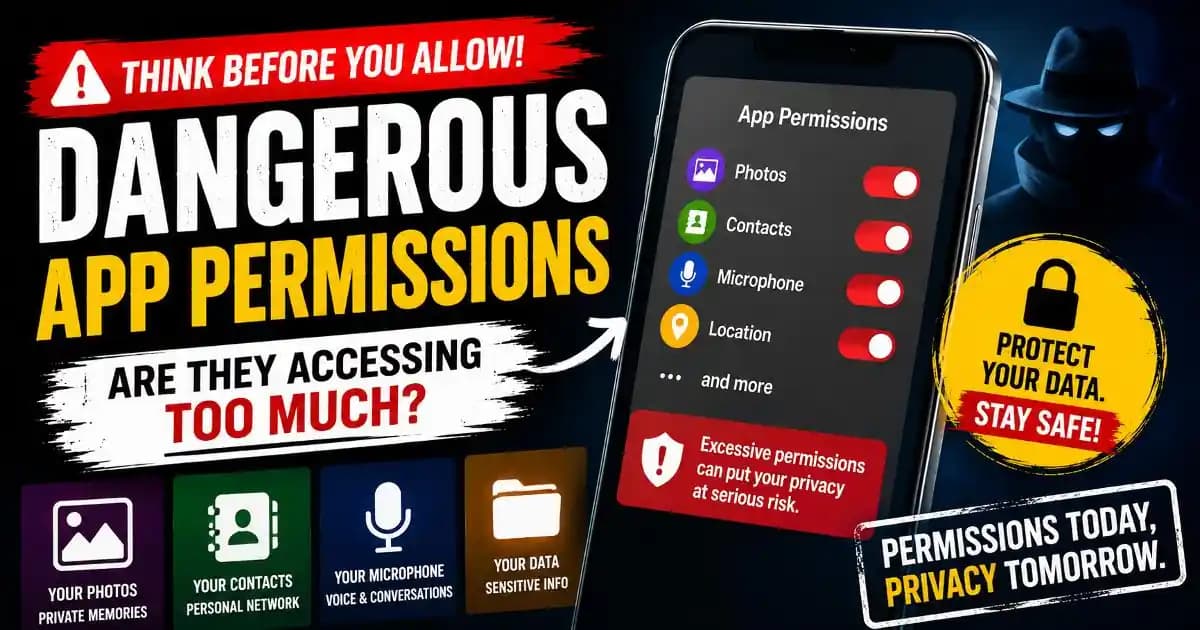
Dangerous app permissions are becoming one of the most discussed privacy concerns among smartphone users who increasingly notice simple apps requesting access to photos, contacts, microphones, notifications, and device activity all at once. A flashlight app asks for microphone access. A wallpaper app requests contacts. A note-taking tool wants background Location permissions. For many users, the requests no longer seem to match the app’s actual purpose.
The confusion reflects a larger shift happening across modern Mobile ecosystems.
Apps today are no longer isolated software tools performing one narrow task. Many operate as connected platforms tied to advertising systems, analytics frameworks, cloud synchronization services, AI-powered personalization tools, and behavioral tracking ecosystems. Permissions became part of that infrastructure.
What once looked like Simple utility software increasingly behaves like a Data Collection environment layered beneath everyday mobile convenience.
This does not automatically mean every app requesting broad Permissions is malicious. Some permissions genuinely support useful functionality. But the growing mismatch between app purpose and requested access is raising legitimate questions about how mobile software ecosystems now operate during 2025 and 2026.
Why Modern Apps Request So Many Permissions
Earlier smartphone apps were relatively limited in scope.
A calculator calculated. A flashlight activated the camera light. A Messaging app handled Messages.
Modern apps increasingly combine multiple services together.
A single app may now include:
- Cloud backup systems
- AI-powered recommendations
- Social sharing features
- Voice input
- Analytics tracking
- Advertising integrations
- Cross-device syncing
- Behavioral personalization
Each additional system may require Access to different parts of the device.
For example, microphone access may support voice search. Photo access may support uploads or profile customization. Contact access may help social discovery or messaging features.
The Problem begins when apps Request broad permissions without clear explanations or when the level of access Appears disproportionate to the app’s actual functionality.
Users increasingly struggle to distinguish between legitimate technical requirements and excessive data collection.
How Mobile Permission Systems Evolved
Both Android and iPhone operating systems significantly expanded Privacy controls over the past several years.
Modern devices now allow users to:
- Grant temporary access
- Allow permissions only while using the app
- Disable background activity
- Review permission history
- Restrict sensitive content access
These controls exist because smartphones became deeply integrated into personal life.
Phones now contain:
- Private conversations
- Banking activity
- Family photos
- Work documents
- Authentication systems
- Health information
- Location history
As apps gained access to more sensitive data, operating systems responded by making permission visibility more explicit.
But despite stronger controls, many users still approve requests quickly because mobile ecosystems prioritize frictionless onboarding experiences.
The average person wants the app to work Immediately, not analyze technical permission details during Installation.
Why Photo Access Became So Common
Photo permissions are now requested by a huge range of apps, including ones that are not obviously photo-related.
Part of the reason is that modern apps increasingly depend on visual content for engagement.
Apps may request photo access for:
- Profile pictures
- Document uploads
- AI image analysis
- Cloud backup
- Content sharing
- Scanning systems
- Visual search features
At the same time, photo libraries reveal highly personal information.
Images often contain:
- Location metadata
- Family details
- Travel history
- Work information
- Identity documents
- Screenshots of conversations
Modern AI-powered systems can also analyze visual patterns inside images, making photo access more sensitive than many users realize.
This is one reason smartphone platforms increasingly moved toward selective photo access rather than unrestricted library visibility.
Why Contact Access Creates Privacy Questions
Contact permissions are particularly controversial because they expose information not only about the user but also about other people.
Some apps request contact access to:
- Find friends already using the service
- Improve messaging systems
- Suggest connections
- Support invitations
- Sync communication tools
But contact lists can reveal social relationships, workplace structures, family networks, and communication patterns.
Many users increasingly question why entertainment apps, shopping tools, or simple utilities need visibility into personal contact databases at all.
The broader concern is that mobile ecosystems increasingly treat social graphs as valuable behavioral data.
Advertising systems, recommendation engines, and engagement platforms all benefit from understanding how users connect socially.
That commercial incentive sometimes pushes apps toward broader data access than users reasonably expect.
Why Microphone Permissions Feel Especially Sensitive
Microphone access triggers strong emotional reactions because users associate it directly with surveillance concerns.
Some apps legitimately require microphone permissions for:
- Voice messages
- Video recording
- Voice search
- AI assistants
- Audio transcription
- Meetings and calls
But users increasingly wonder why apps with no obvious audio features still request microphone access.
Part of the issue is that modern apps frequently expand functionality after installation. An app that originally performed one simple task may later introduce voice interaction, AI features, or media creation tools.
Another issue involves user trust.
People often cannot easily Verify how actively permissions are being used in the Background. Even though operating systems now display microphone indicators more visibly, the broader perception remains uneasy because smartphones already feel deeply integrated into personal routines.
The concern is not always active spying itself. Sometimes it is the growing realization that apps increasingly seek continuous contextual awareness.
How Advertising Ecosystems Influence Permission Requests
Many mobile apps operate inside broader advertising and analytics ecosystems.
Free Apps especially depend heavily on behavioral data for monetization.
Permissions can help apps and integrated third-party SDKs understand:
- User habits
- Shopping behavior
- Social patterns
- Location activity
- Device usage
- Engagement trends
This information supports targeted advertising, recommendation systems, and personalization engines.
In some cases, the app itself may not directly misuse data, yet external analytics frameworks integrated into the software still process behavioral information behind the scenes.
That complexity makes modern mobile privacy difficult for ordinary users to evaluate.
Users often interact with one visible app while dozens of invisible systems process data in parallel.
Why AI Features Are Expanding Permission Requests
AI-powered app ecosystems significantly increased permission complexity during 2025 and 2026.
Many modern AI tools request broad access because they aim to become contextual assistants rather than isolated applications.
AI apps increasingly seek visibility into:
- Photos
- Messages
- Voice activity
- Notifications
- Calendars
- Files
- Behavioral patterns
The justification usually involves personalization and automation.
An AI assistant may summarize notifications, organize media, suggest reminders, generate captions, or automate workflows. To accomplish this, developers argue the system requires broader contextual awareness.
This creates a difficult balance between productivity benefits and privacy exposure.
Users may gain convenience while simultaneously sharing far more behavioral information than they fully understand.
How “Permission Fatigue” Changed User Behavior
Modern smartphone users encounter permission prompts constantly.
People repeatedly click:
- Allow
- Continue
- Grant access
- Enable permissions
without evaluating the request carefully.
This behavior is often called permission fatigue.
Apps increasingly design onboarding flows around momentum and convenience. The faster users approve permissions, the faster they reach the app’s main experience.
Over time, users become conditioned to accept access requests Automatically.
That normalization benefits both legitimate ecosystems and potentially abusive ones.
Some Suspicious Apps intentionally overwhelm users with multiple prompts quickly because hesitation decreases when approvals become repetitive.
Why Android and iPhone Handle Permissions Differently
Android and iOS approach permissions with slightly different philosophies.
Android historically prioritized flexibility and openness, giving developers broader capabilities while gradually tightening restrictions over time.
Apple’s ecosystem generally emphasizes stricter permission visibility and tighter integration controls.
However, both platforms increasingly compete around privacy messaging because users became more aware of behavioral Tracking concerns.
Modern systems now display indicators for:
- Microphone usage
- Camera activity
- Location tracking
- Clipboard access
The visibility itself reflects how central permissions became to modern digital trust.
How Dangerous App Permissions Connect to Mobile Fraud
Some dangerous permission combinations create direct Security risks.
Malicious or deceptive apps may abuse permissions to:
- Read notifications
- Capture authentication codes
- Monitor screen activity
- Track location behavior
- Overlay fake login screens
- Access private files
Accessibility permissions and notification access became particularly sensitive because they can expose large portions of user activity across multiple apps simultaneously.
Modern Android malware increasingly abuses these systems because users became more cautious about obvious SMS permissions.
The broader trend reflects how digital fraud evolved beyond simple viruses toward behavioral observation and ecosystem manipulation.
What Users Should Actually Review Before Granting Access
Not every permission request is dangerous, but context matters more than ever.
Users should ask:
- Does the permission match the app’s purpose?
- Could the feature work with limited access instead?
- Is the developer trustworthy?
- Does the app explain the request clearly?
- Why would this simple app need broad visibility?
Modern mobile systems now allow more granular control, including selective photos, temporary permissions, and “while using the app” access.
These settings exist because permission management became central to digital privacy itself.
The Bigger Shift Happening Across Mobile Software
The debate around dangerous app permissions reflects a larger transformation happening across technology ecosystems.
Apps increasingly compete to become predictive, personalized, and continuously aware of user behavior. They no longer function only as isolated tools. They operate as interconnected service environments built around engagement, automation, AI assistance, analytics, and behavioral insight.
Permissions became the gateway into that ecosystem.
As smartphones continue evolving into identity platforms, productivity hubs, financial tools, and AI-driven assistants, permission systems will likely become even more important during the next phase of mobile computing.
The challenge for users is no longer simply avoiding malware. It is learning how to understand the invisible relationships between convenience, personalization, behavioral tracking, and digital trust.
Sometimes the most important privacy decision on a phone is not which app gets installed. It is which permissions users quietly approve without thinking twice.