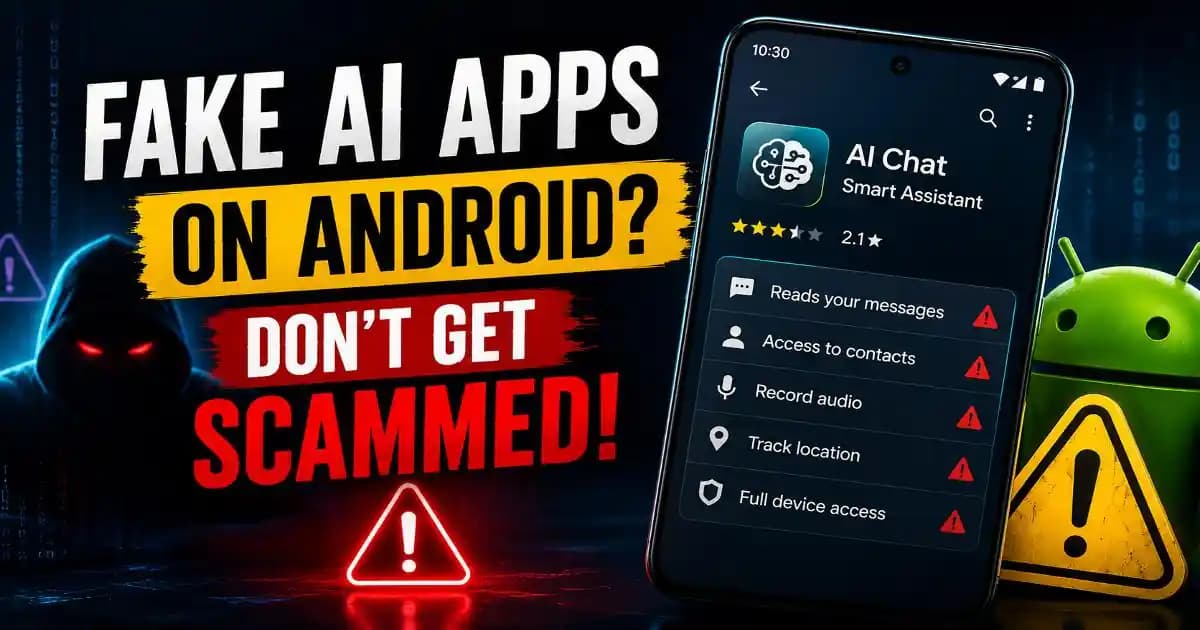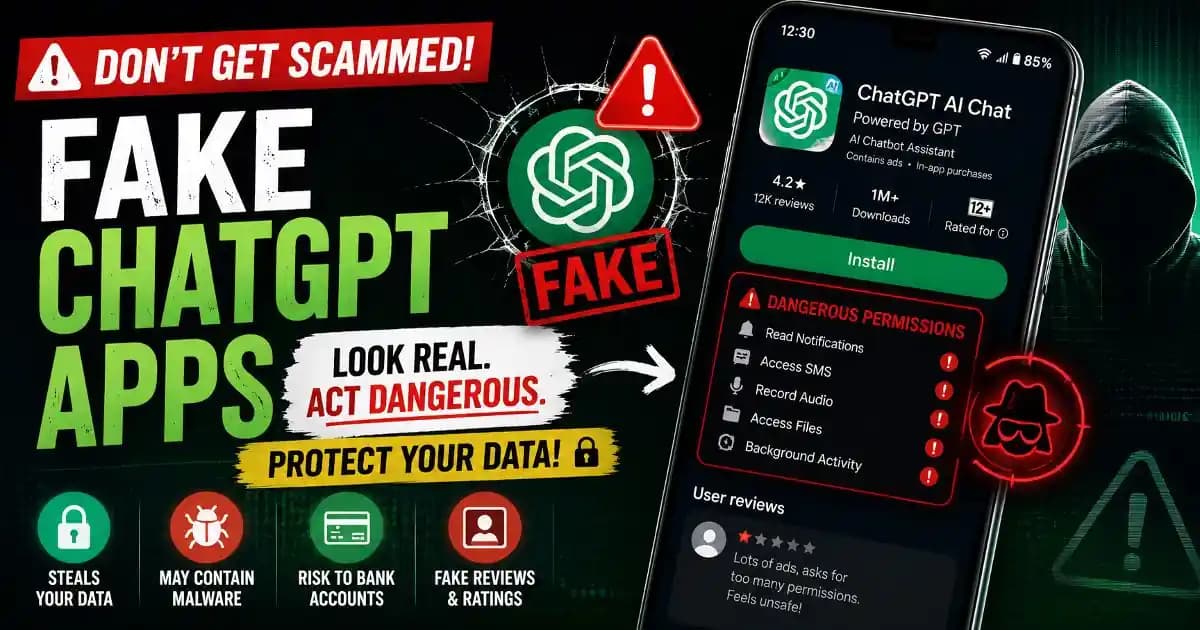
Fake ChatGPT apps Android users install for AI conversations, writing help, or productivity tasks are becoming a growing security concern as scammers exploit the massive popularity of AI chatbots to distribute suspicious software. Many of these apps imitate trusted AI platforms visually while quietly requesting dangerous permissions, displaying aggressive ads, or collecting sensitive user data.
The trend reflects a larger shift happening across mobile ecosystems during 2025 and 2026. AI tools are no longer niche software used mainly by developers or researchers. They now sit at the center of education, remote work, content creation, customer support, and personal productivity.
That popularity created a powerful opportunity for fake apps.
Android users searching for AI assistants often encounter dozens of chatbot applications using names, logos, colors, and screenshots that resemble major AI platforms. Some appear inside official app stores. Others spread through APK websites, social media ads, messaging groups, and video tutorials promising “unlimited AI Access” or “premium ChatGPT for free.”
For users, the experience feels familiar and convincing. For attackers, it creates a highly effective Social engineering environment built around curiosity and convenience.
Why Fake ChatGPT Apps Are Spreading So Quickly
AI adoption accelerated faster than most mobile users learned how to Verify AI software authenticity.
Millions of people now search app stores daily using terms like:
- ChatGPT app
- AI chatbot
- AI writing assistant
- GPT AI tool
- free ChatGPT Android
- AI homework helper
- AI image generator
That search behavior creates a crowded marketplace filled with lookalike apps competing for attention.
Some fake apps intentionally imitate trusted ecosystems using:
- Similar icons
- Green or black branding
- Chat-style interfaces
- GPT-related naming
- AI-generated promotional screenshots
Users often judge legitimacy visually rather than Verify (1)ing who actually developed the application.
This is especially common on Android because the ecosystem supports broader app distribution and alternative Installation sources compared to more tightly controlled Mobile environments.
How Suspicious AI Chatbot Apps Behave on Android
Not every unofficial AI app is Dangerous. Many developers legitimately build tools using public AI APIs and chatbot frameworks.
The Problem is that some apps use the AI trend mainly as a disguise for aggressive behavior.
Dangerous Permission Requests
One of the biggest Warning signs involves Permissions that do not match the app’s purpose.
A simple chatbot app usually should not require:
- SMS access
- Call logs
- Accessibility permissions
- Notification access
- Background activity exemptions
- Device administrator rights
Yet many Suspicious AI apps Request exactly these permissions.
Accessibility permissions are especially sensitive because they can potentially allow apps to observe screen content, interact with interface elements, and monitor Activity across other apps.
Some Android malware families increasingly abuse these permissions to intercept banking activity, authentication prompts, or Security Alerts.
Fake Premium Features and Subscription Traps
Another common pattern involves apps advertising advanced AI capabilities that barely function after Installation.
Users may encounter:
- Fake loading screens
- Prewritten responses instead of real AI
- Heavy advertising layers
- Misleading “unlimited AI” offers
- Expensive recurring subscriptions
- Artificial paywalls
In many cases, the application’s primary purpose is monetization rather than meaningful AI functionality.
The AI label itself becomes the attraction mechanism.
Hidden Data Collection
AI chatbot apps naturally encourage users to type large amounts of Personal information.
People frequently share:
- Email drafts
- Business ideas
- School assignments
- Private thoughts
- Workplace documents
- Financial questions
- Personal problems
That conversational data can become extremely revealing.
Some suspicious apps appear to combine chatbot interactions with aggressive analytics frameworks, behavioral Tracking systems, advertising networks, and device fingerprinting technologies.
Unlike traditional apps where users perform limited actions, AI chat interfaces encourage extended interaction. That produces richer behavioral profiles.
Why Fake AI Apps Feel More Trustworthy Than Old Malware
Traditional malware often looked suspicious Immediately. Fake antivirus tools, broken interfaces, and obvious scams were easier to recognize.
Modern fake AI apps operate differently.
They imitate productivity software, educational tools, or creativity assistants. The interface may look polished. Conversations may partially work. Some even connect temporarily to legitimate cloud AI services before pushing users toward subscriptions or Collecting excessive data.
This hybrid behavior makes detection harder.
Users increasingly trust apps that appear intelligent or conversational. The chatbot format itself creates psychological comfort because interactions feel human-like and helpful.
That emotional trust layer becomes part of the attack surface.
The Role of Social Media in Fake ChatGPT App Growth
Short-form content platforms now heavily influence mobile app downloads.
Videos claiming:
- “Secret AI app students use”
- “Free ChatGPT premium access”
- “AI app nobody knows about”
- “Unlimited GPT tool”
can rapidly push users toward questionable installations.
Many fake AI apps spread through:
- Telegram groups
- YouTube tutorials
- TikTok clips
- Third-party APK sites
- Social media advertisements
- Messaging app referrals
The urgency and hype surrounding AI tools reduce skepticism.
Users often install software impulsively because they fear missing productivity advantages or exclusive AI features.
How Malware Creators Exploit AI Curiosity
Cybercriminals increasingly recognize that AI apps create ideal malware delivery environments.
People expect AI software to:
- Require internet access
- Process large amounts of data
- Run background tasks
- Access files and documents
- Interact conversationally
That expectation normalizes behavior that might otherwise appear suspicious.
Some malicious Android apps disguise spyware, adware, or credential-stealing functionality Behind AI branding because users assume advanced AI systems naturally need broad device access.
This creates a modern form of social engineering where technical complexity itself becomes camouflage.
Why Android Remains a Major Target
Android’s flexibility gives users access to diverse software ecosystems, but it also creates more exposure to deceptive installations.
Apps can spread through:
- Official marketplaces
- Alternative app stores
- APK downloads
- Direct browser installations
- Messaging attachments
- Cloud file sharing links
Many fake AI apps encourage sideloading by claiming:
- The app is unavailable in certain regions
- Official stores removed the “uncensored” version
- The APK includes unlocked premium AI
- The software bypasses subscription limits
These tactics intentionally weaken user caution.
Google continues improving Android Protections Through Play Protect, developer Verification systems, permission dashboards, and behavioral monitoring. But the speed of AI app growth creates constant moderation challenges.
The Privacy Risks Extend Beyond Malware
Not every fake ChatGPT-style app contains direct malware.
Some risks are more subtle.
Apps may:
- Store conversations insecurely
- Share prompts with advertisers
- Track user behavior extensively
- Monetize uploaded content
- Build marketing profiles
- Collect unnecessary analytics
Users often treat AI conversations casually because chatbot interactions feel temporary and informal. But these interactions can contain highly sensitive information about work, relationships, schedules, finances, and personal interests.
The broader privacy concern is not only what fake apps steal directly, but how much intimate behavioral information users voluntarily provide.
What Android Users Should Verify Before Installing AI Apps
The safest approach is not avoiding AI tools entirely. Many legitimate AI applications provide meaningful educational, creative, and productivity value.
But users should verify:
- The actual developer identity
- Official publisher links
- Permission requests
- Review authenticity
- Privacy policy transparency
- Update history consistency
- Whether the app genuinely connects to known AI services
Users should also be cautious about apps claiming unrealistic AI capabilities or offering premium services for free through unofficial APK downloads.
Convenience often becomes the entry point for compromise.
The Bigger Shift Happening Across Mobile Security
The rise of fake ChatGPT apps reflects a broader transformation happening across digital ecosystems.
Cybersecurity threats increasingly imitate legitimate productivity systems instead of obvious malicious software. Attackers no longer rely only on technical exploits. They exploit curiosity, trust, workflow habits, and modern digital behavior.
AI platforms create especially powerful opportunities because users already associate them with intelligence, automation, and assistance.
As AI becomes integrated into search engines, productivity software, cloud platforms, education tools, and mobile operating systems, fake AI ecosystems will likely continue expanding alongside legitimate innovation.
The challenge for users is no longer simply avoiding malware. It is learning how to recognize when software uses the language and appearance of intelligence mainly to collect trust, data, permissions, and access.
On modern Android devices, the most convincing fake apps increasingly look like the future people are excited to use.