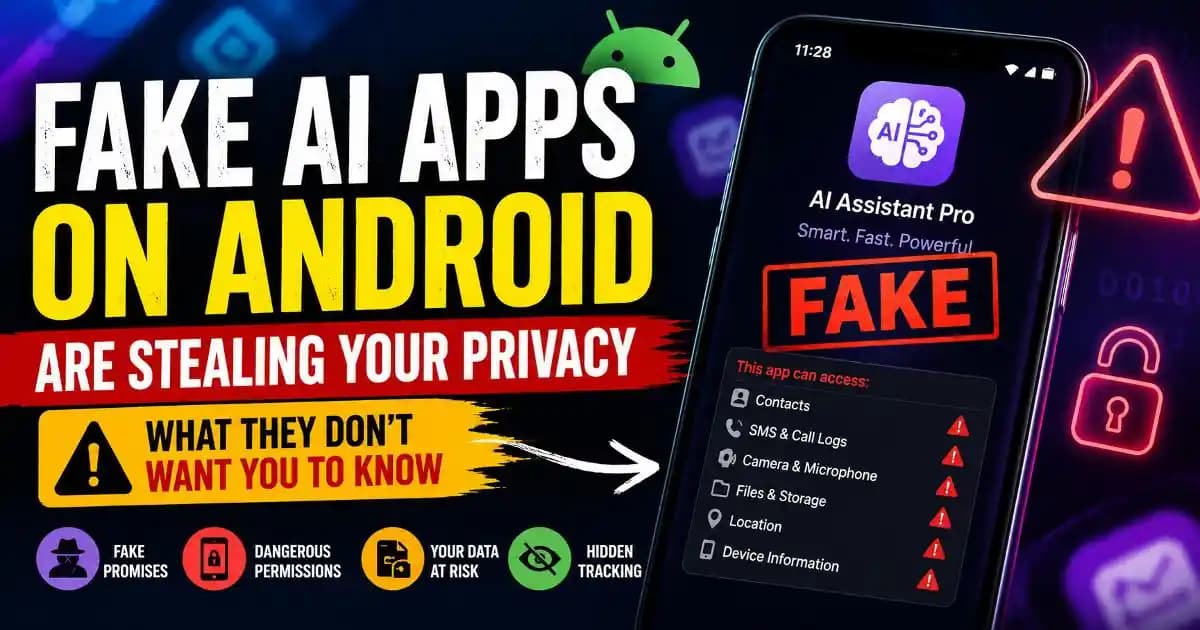
Fake AI apps Android users download for writing, image generation, study help, or productivity are quietly becoming one of the more concerning privacy trends inside the mobile app ecosystem. Many of these applications appear polished on the surface, borrow visual styles from well-known AI platforms, and promise advanced features, yet behave more like aggressive data collection tools than useful software.
The shift is happening at a moment when AI curiosity is extremely high. Millions of users now search app stores for AI assistants, AI photo editors, AI note-taking apps, AI voice tools, and AI productivity systems almost daily. That growing demand has created an ideal environment for copycat developers and deceptive mobile applications.
Some of these apps are merely low-quality clones designed to generate ad revenue. Others raise deeper concerns because of the Permissions they request, the background activity they perform, and the amount of personal data they attempt to access.
What makes the situation more complicated is that many users no longer treat AI apps as ordinary software. They interact with them conversationally, upload private files, share work documents, provide voice recordings, and sometimes even reveal sensitive Personal information inside prompts.
That changes the privacy risk dramatically.
Why AI-Themed Android Apps Are Expanding So Quickly
The Android ecosystem has always moved faster and more openly than tightly controlled software environments. That openness creates innovation, but it also creates opportunity for abuse.
As large AI platforms gained mainstream attention during 2024, 2025, and 2026, app marketplaces became flooded with tools using terms like:
- AI assistant
- AI writer
- AI homework helper
- AI avatar creator
- AI keyboard
- AI scanner
- AI chatbot
- AI image enhancer
Many of these apps are not directly connected to major AI providers at all. Some imitate branding styles associated with companies like OpenAI, Google, or Microsoft without clearly explaining who actually operates the software.
For users, the distinction is often blurred. An app with a futuristic icon, polished screenshots, and chatbot-style conversations can easily appear legitimate.
That confusion is part of the problem.
How Suspicious AI Apps Behave on Android Devices
Not every unknown AI app is dangerous, but Security researchers and Android users increasingly report patterns that raise concerns.
In many cases, the risk is less about dramatic malware behavior and more about Excessive Access combined with vague transparency.
Overreaching Permissions
One of the biggest Warning signs involves Permission Requests that do not match the app’s actual purpose.
An AI wallpaper generator, for example, may request:
- Contact access
- SMS visibility
- Call logs
- Notification access
- Microphone permissions
- Accessibility controls
- Background battery exemptions
Some Permissions are understandable for specific features. Voice AI tools may need Microphone access. AI camera apps may need storage permissions.
But Problems begin when unrelated access appears without clear justification.
Accessibility permissions are particularly sensitive because they can potentially allow apps to observe screen Activity, interact with interface elements, and monitor user behavior across other applications.
Modern Android Security systems warn users about these permissions, but many people quickly approve prompts while exploring AI features.
Subscription Traps and Dark Patterns
Another common pattern involves aggressive monetization disguised as AI functionality.
Some fake AI apps advertise free capabilities Through Social Media videos or short-form content platforms. Once Installed, users encounter:
- Confusing subscription screens
- Hidden recurring payments
- Fake loading systems
- Artificial usage limits
- Misleading “premium AI” upgrades
In some cases, the actual AI functionality barely exists. The application may rely on prewritten responses, recycled templates, or cloud APIs wrapped inside deceptive interfaces.
The AI label itself becomes the marketing strategy.
Background Tracking and Data Collection
Many AI apps collect extensive analytics data because conversational systems naturally generate valuable behavioral insights.
Users often type:
- Personal goals
- Business ideas
- Work notes
- Email drafts
- Passwords accidentally
- Financial concerns
- Medical questions
That information can become highly sensitive even if it is not officially classified as personal identification data.
Some Suspicious Apps appear to combine AI interactions with advertising frameworks, device fingerprinting systems, and broad behavioral Tracking tools.
Unlike traditional search engines, conversational AI interactions often contain emotional context, productivity Habits, and private thought patterns. That makes the collected data unusually revealing.
The Problem With Fake Branding and Impersonation
One growing issue involves AI apps that intentionally mimic trusted technology ecosystems.
Some use names visually similar to:
- ChatGPT
- Gemini
- Copilot
- Claude
- DeepSeek
- popular AI photo editors
Others imitate interface design styles associated with major AI platforms.
The goal is not always direct malware infection. Sometimes developers simply want downloads, ad impressions, subscriptions, or user data.
But Impersonation still creates security risks because users may assume the app follows the Privacy standards of the company it appears connected to.
Android users increasingly operate inside crowded app environments where visual trust matters more than publisher Verification. That creates opportunities for misleading design.
Why AI Apps Create Different Privacy Risks Than Traditional Apps
AI software changes the nature of user interaction.
Traditional apps usually collect structured actions. A navigation app tracks locations. A messaging app handles conversations. A photo editor accesses images.
AI apps often combine multiple forms of interaction at once.
A single AI application may process:
- Voice recordings
- Text prompts
- Uploaded documents
- Photos
- Clipboard content
- Camera access
- Behavioral feedback
- Productivity habits
That concentration of information makes AI ecosystems unusually data-rich.
Users also behave differently around conversational interfaces. People tend to trust systems that appear intelligent or helpful. They may reveal more information to a chatbot than they would inside a normal search box.
This psychological shift matters as much as the technical permissions themselves.
How Short-Form Content Fuels Fake AI App Growth
Social media platforms increasingly drive downloads for questionable AI apps.
Short videos often showcase dramatic demonstrations like:
- “This AI makes you rich”
- “Secret AI app students use”
- “Undetectable AI writer”
- “Free AI tool before it gets banned”
These videos rarely explain who built the app, how data is processed, or what permissions are Requested after installation.
The combination of AI hype and viral content creates rapid trust shortcuts. Users install apps impulsively because the software appears innovative or exclusive.
This behavior pattern has become especially visible among younger Android users experimenting with productivity tools, content generation apps, and AI-enhanced editing systems.
Google’s Android Ecosystem Faces a Difficult Balance
Google continues improving Android security through Play Protect, permission controls, app sandboxing, and developer verification systems. But AI-related apps create new moderation challenges.
Many Suspicious AI apps technically comply with basic marketplace requirements while still creating questionable privacy environments.
Unlike traditional malware, these apps may not directly steal files or aggressively attack devices. Instead, they exploit unclear disclosures, manipulative subscriptions, excessive permissions, or behavioral tracking.
That gray area makes enforcement harder.
The rapid pace of AI software development also means marketplaces struggle to distinguish genuine innovation from opportunistic imitation.
What Android Users Should Watch Before Installing AI Apps
Users do not need to avoid AI tools entirely. Many legitimate AI applications provide useful productivity, education, accessibility, and creative benefits.
But the AI label itself should not Automatically create trust.
Important signals worth reviewing include:
- Developer reputation and history
- Permission requests compared to app purpose
- Transparency around subscriptions
- Privacy policy clarity
- App store review patterns
- External website legitimacy
- Update consistency
- Requests for accessibility permissions
Users should also pay attention to emotional manipulation inside app marketing. Urgent claims, exaggerated AI promises, and “hidden secret tool” language often indicate low-trust ecosystems.
The Bigger Change Happening Inside Mobile Software
The rise of suspicious AI apps reflects a broader transformation happening across the technology industry.
AI is no longer a specialized developer tool. It has become a consumer interface layer embedded into search, productivity, education, communication, and entertainment.
That creates enormous opportunity, but also enormous surface area for abuse.
During earlier Mobile eras, users mainly worried about obvious malware infections. Today’s concerns are more subtle. Privacy erosion, behavioral profiling, hidden subscriptions, manipulative permissions, and ecosystem impersonation increasingly define modern app risk.
As AI tools become more conversational and integrated into everyday workflows, users will likely share even larger portions of their digital lives with software systems they barely understand.
The most important security skill may no longer be identifying obvious malware. It may become learning how to recognize when a supposedly intelligent app is Collecting far more trust than it deserves.