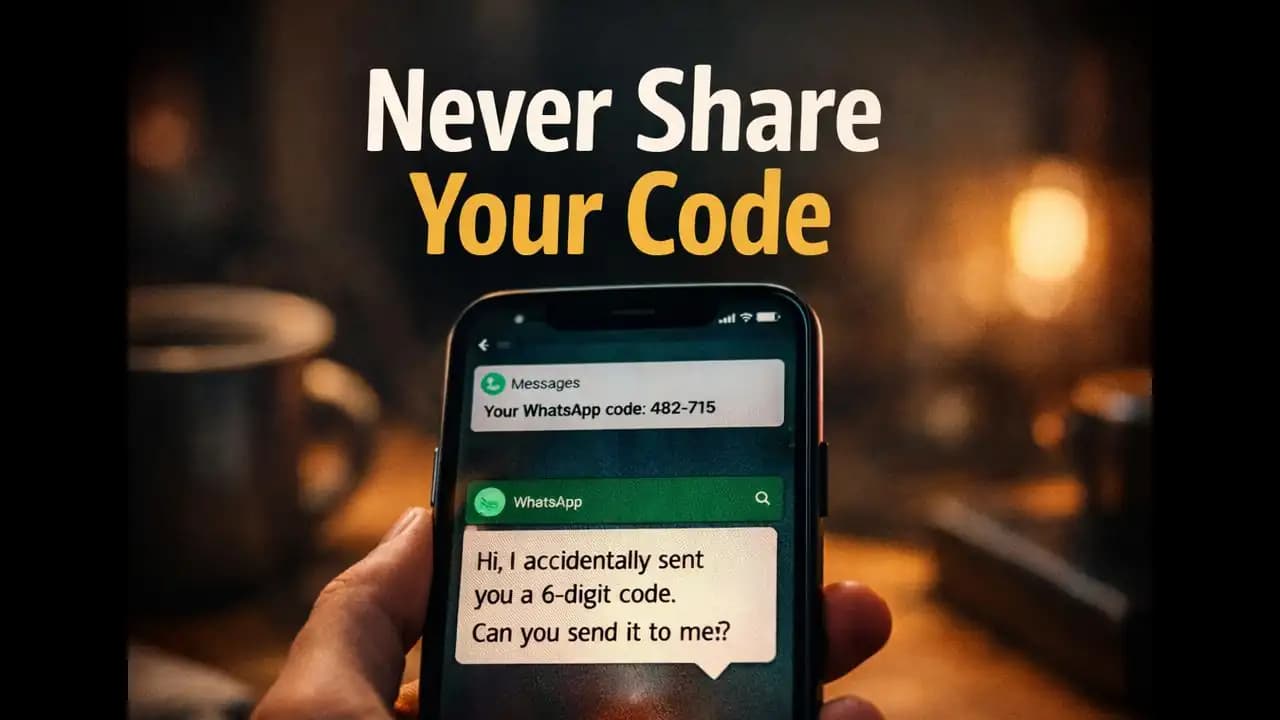
WhatsApp code scam messages are becoming a surprisingly common experience for smartphone users. It often starts with something that seems harmless a friend texting you saying they accidentally sent their verification code to your number and asking if you can forward it. At first, it feels like a simple favor. But in many cases, that small request is exactly how scammers take control of someone’s WhatsApp account.
For many people, the realization comes only after their own account suddenly logs out, their contacts receive strange Messages, or they lose access to their chats entirely. What looked like a minor mistake turns out to be a carefully planned social engineering trick.
Understanding how this scam works can help you avoid becoming the next victim.
A Situation Many WhatsApp Users Have Already Experienced
Imagine this scenario.
You receive a WhatsApp Message (1) from someone in your contacts list. It might be a friend, a coworker, or even a family member. The message sounds casual and urgent at the same time:
“Hey, I accidentally sent my WhatsApp code to your number. Can you send it to me please?”
Or sometimes:
“I’m trying to log into WhatsApp and the verification code went to you by mistake. Please share it.”
Because the Message again appears to come from someone you know, your first instinct may be to help.
A few seconds later, you receive a six-digit SMS verification code from WhatsApp.
The Request suddenly seems believable. The code arrived on your phone, and someone you trust is asking for it. Many people forward the code without thinking twice.
But the moment that code is shared, the attacker gains the ability to register your WhatsApp Account on another device.
Within minutes, you may be logged out of your own account.
Why People Are Suddenly Seeing These Requests
The reason behind this pattern is simple: WhatsApp accounts are extremely valuable to scammers.
Unlike random phone numbers, WhatsApp accounts come with something scammers want even more a network of trusted contacts.
When attackers gain Access to one Account, they Immediately begin Messaging everyone in that contact list. Because the Messages come from a familiar name and profile picture, people are more likely to respond.
This technique spreads quickly through Friend groups, workplaces, and family circles.
In many cases, the scam begins when a criminal Attempts to register your WhatsApp number on their device. WhatsApp Automatically sends the login Verification code to Your Phone.
The attacker cannot see that code unless you give it to them.
That’s why they try to trick you into sending it voluntarily.
Common Warning Signs Users Should Recognize
The WhatsApp code scam usually follows a predictable pattern. Once you know what to look for, the Warning signs become easier to spot.
1. Someone asks for a WhatsApp verification code
WhatsApp verification codes are never meant to be shared with anyone not even friends.
Every official WhatsApp Message clearly says something like:
“Do not share this code with anyone.”
If someone asks for it, something is wrong.
2. The request feels slightly rushed
Scammers often try to create urgency. Messages may say Things like:
- “Please send it quickly.”
- “I need it to log in.”
- “My phone isn’t working.”
This pressure is designed to make people act Before thinking.
3. The message comes from someone you know but feels unusual
Sometimes the person messaging you has already been hacked. That means the message may come from a legitimate account belonging to a real friend.
However, the writing style may feel slightly different. The request may also feel out of character.
4. You receive a verification code you didn’t request
If WhatsApp sends you a login code unexpectedly, it often means someone is trying to sign in using your number.
That alone is already a warning sign.
Why This Situation Can Become Dangerous
Sharing a WhatsApp verification code might seem harmless, but it can quickly lead to serious problems.
Once scammers control an account, they often start sending messages like these:
“Can you send me money urgently?”
“I’m stuck and need help.”
“Please transfer ₹5,000 and I’ll pay you back.”
Because the request Appears to come from someone familiar, friends and family sometimes send money without questioning it.
This turns a simple verification code mistake into a financial scam affecting multiple people.
In other cases, attackers use stolen Accounts to spread additional scams, phishing links, or fake job offers.
The damage can spread quickly.
How These Scams Have Evolved in 2024–2025
Over the past two years, Security researchers and digital safety groups have noticed a steady increase in account takeover scams.
Several changes have made the WhatsApp code scam more effective.
More social engineering
Attackers are becoming better at writing believable messages. Instead of generic requests, they now mimic real conversations and friendly language.
Targeting trusted relationships
Rather than contacting strangers, scammers often rely on compromised accounts to reach people who already trust the sender.
This dramatically increases the success rate.
Faster account takeover attempts
In many recent cases reported during 2024 and early 2025, attackers send code requests and messages within minutes of each other to create confusion.
Some victims realize what happened only after they lose access.
Expanding beyond WhatsApp
Once scammers control an account, they sometimes attempt to access other services connected to the phone number including Social Media accounts and payment apps.
This is why protecting that verification code is so important.
Simple Ways to Protect Yourself
The good news is that avoiding the WhatsApp code scam is surprisingly simple once you understand the trick.
Never share a WhatsApp verification code
This rule is absolute.
No friend, company, or support team will ever need your login code.
If someone asks for it, the safest response is not to send anything.
Contact the person directly if the message seems suspicious
If a friend asks for your code, try calling them or sending a message outside the conversation.
Their account may already be compromised.
Turn on two-step verification in WhatsApp
WhatsApp includes an extra security feature called two-step verification. This adds a PIN that prevents attackers from registering your account even if they get the SMS code.
Many users still haven’t enabled it.
Be cautious with unexpected login codes
If you receive a WhatsApp verification code without requesting it, simply ignore it.
Someone may be attempting to log in using your number.
As long as you do not share the code, your account remains safe.
A Small Request That Can Lead to a Big Problem
The WhatsApp code scam works not because of advanced hacking, but because it relies on something very human: trust.
People want to help their friends. They respond quickly to familiar names. And when a request seems small, it rarely feels risky.
But that six-digit code is the key to your entire WhatsApp account.
Taking a moment to pause before sharing it can prevent not only your own account from being taken over, but also protect the people in your contact list from becoming the next targets.
Digital scams rarely look dramatic at first. Often, they arrive as a simple message Asking for a quick favor.
Recognizing that pattern is one of the most powerful ways to stay safe online.
FAQs
What is the WhatsApp code scam?
The WhatsApp code scam is a social engineering trick where someone asks for your WhatsApp verification code. If you share it, attackers can log into your WhatsApp account and take control of it.
Why would someone ask for my WhatsApp verification code?
Scammers ask for the code so they can register your WhatsApp account on their device. Once they gain access, they may message your Contacts to spread scams or request money.
What should I do if I accidentally shared my WhatsApp code?
Immediately try to log back into WhatsApp using your phone number. This will send a new verification code and may lock the attacker out. You Should also enable two-step verification as soon as possible.
How can I protect my WhatsApp account from scammers?
Never share verification codes, enable two-step verification in WhatsApp settings, and be cautious if someone unexpectedly asks for login information or urgent help messages.