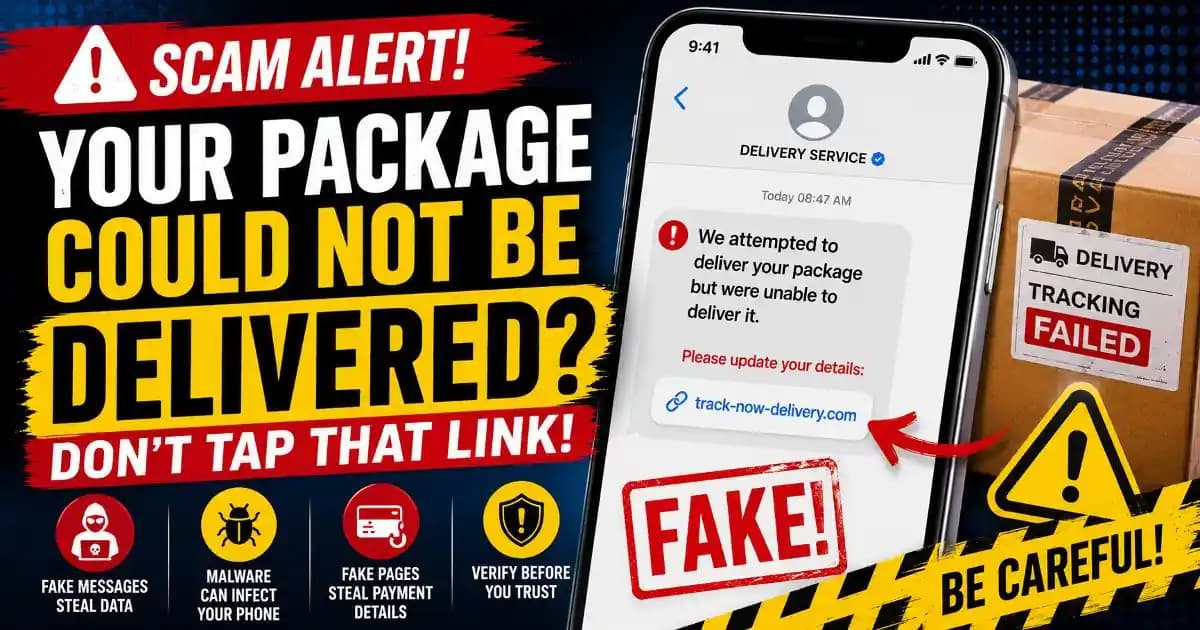
Package delivery phishing scam messages are becoming one of the most common forms of mobile fraud as users receive urgent alerts claiming a parcel could not be delivered, a shipping fee is pending, or an address requires verification. The messages often arrive at believable moments, especially during busy shopping seasons when people genuinely expect deliveries.
That timing is what makes these scams unusually effective.
A user glances at a notification while commuting, working, or scrolling quickly through messages. The alert appears routine. A package problem feels plausible. The message contains a tracking link, a customer support button, or a Request to confirm details.
Within seconds, the user may already be interacting with a fake website designed to steal credentials, payment information, or Account access.
Modern Delivery phishing campaigns are no longer crude spam operations filled with obvious spelling mistakes. Many now imitate legitimate logistics systems, customer service workflows, and mobile notification styles with surprising accuracy.
As Online shopping, same-day delivery services, and app-based commerce continue expanding during 2025 and 2026, package-related phishing attacks increasingly blend into everyday digital behavior.
Why Delivery Scams Work So Well Today
Delivery notifications became a normal part of modern life.
People routinely receive messages from:
- Courier companies
- E-commerce platforms
- Food delivery services
- Ride-sharing apps
- Retail marketplaces
- Postal systems
That constant stream of legitimate alerts conditions users to react quickly.
Unlike older phishing campaigns that depended on unrealistic claims, delivery scams exploit situations users already experience regularly. A delayed package or address issue feels ordinary rather than Suspicious.
The psychology is subtle. Attackers do not always rely on fear alone. They rely on interruption and convenience.
The user thinks:
- “Maybe this is my order.”
- “I should check before it gets returned.”
- “I probably missed a delivery attempt.”
That small moment of uncertainty is enough.
How Package Delivery Phishing Messages Usually Appear
Most scams follow similar patterns but adapt constantly to current shopping trends and regional Delivery services.
Common messages include:
- Your package could not be delivered
- Confirm your shipping address
- Pay a small customs fee
- Your parcel is on hold
- Delivery failed due to missing information
- Track your package now
These alerts often arrive through:
- SMS messages
- WhatsApp chats
- Telegram messages
- Email notifications
- Social media inboxes
Some campaigns include fake Tracking numbers, courier logos, or links resembling legitimate delivery platforms.
Others use shortened URLs to hide suspicious destinations.
In many cases, the goal is to push users toward:
- Credential theft pages
- Fake payment portals
- Malware downloads
- Banking phishing systems
- Remote support scams
The delivery message itself is often only the entry point.
Why Mobile Devices Increased the Risk
Package phishing became significantly more effective because modern shopping Happens primarily on smartphones.
People now track deliveries, approve payments, read Messages, and authenticate Accounts from the same device continuously Throughout the day.
Mobile screens naturally reduce visibility.
Users are less likely to inspect URLs carefully or notice subtle domain differences on a phone compared to a desktop browser. Notifications also encourage rapid interaction.
A Message appears, the user taps Immediately, and the phishing process begins Before critical thinking fully activates.
Modern Mobile operating systems are optimized for frictionless experiences. Autofill systems, biometric logins, saved payment methods, and instant browser previews all improve convenience. Unfortunately, they also help phishing pages feel more seamless.
How WhatsApp and Messaging Apps Changed Phishing Distribution
Traditional phishing relied heavily on email spam.
Today, Messaging platforms became central delivery channels because users trust them more.
A Suspicious email might trigger caution. A WhatsApp message feels personal and immediate.
Some scams even spread through compromised accounts belonging to real Contacts. Users may Receive fake delivery Messages forwarded by friends or family members who unknowingly interacted with the scam earlier.
This creates layered trust:
- The platform feels familiar
- The message resembles normal delivery alerts
- The sender may appear legitimate
By the time suspicion appears, the phishing website may already have captured sensitive information.
Why Small Payment Requests Are Especially Dangerous
Many delivery phishing campaigns Request tiny payments rather than large transfers.
The scam may claim:
- A customs processing fee
- A redelivery charge
- A verification payment
- A storage surcharge
The amount is often intentionally small because low numbers reduce skepticism.
Users think:
“It’s only a small fee.”
But the actual goal may not be the payment itself.
Fake payment pages frequently attempt to collect:
- Credit card numbers
- Banking credentials
- Billing addresses
- Authentication codes
- Mobile numbers
Some scams also test whether stolen cards remain active for future fraud operations.
How Modern Scams Imitate Real Logistics Systems
Delivery phishing campaigns increasingly copy the visual design language of legitimate courier ecosystems.
Attackers imitate:
- Tracking dashboards
- Package status indicators
- Progress bars
- Map interfaces
- Customer support chats
- Delivery confirmation systems
Some fake websites even mimic mobile app layouts closely enough that users believe they are interacting with real delivery services.
The sophistication reflects how digital scams evolved during 2025 and 2026. Fraud operations increasingly study user experience design rather than relying only on technical hacking methods.
Modern phishing succeeds because it feels familiar.
The Hidden Role of Data Leaks and Shopping Behavior
Some delivery phishing campaigns become more convincing because attackers already know partial information about users.
Phone numbers, shopping habits, email addresses, and leaked customer databases can help scammers craft targeted messages.
Even broad timing patterns matter.
During major sales events or holiday shopping periods, people expect packages constantly. Attackers exploit that expectation by sending delivery messages at moments when users are already waiting for real shipments.
This is one reason phishing feels increasingly personalized even when the scam itself is sent to millions of people.
Why AI Is Changing Delivery Scams
AI-generated text systems are quietly improving phishing quality.
Older scam messages often contained awkward grammar or obvious formatting problems. Modern phishing campaigns increasingly produce polished, localized, and convincing communication.
AI systems can help attackers generate:
- Natural-sounding customer support language
- Localized delivery messages
- Multiple language variations
- Professional formatting
- Dynamic phishing conversations
This reduces traditional Warning signs users once relied on.
At the same time, AI-driven customer support systems used by legitimate companies make automated scam conversations feel more believable because users already expect chatbot interactions during delivery issues.
How Malware Sometimes Enters Through Delivery Messages
Not every package phishing scam focuses only on credential theft.
Some campaigns attempt to Install malicious apps disguised as:
- Tracking tools
- Delivery verification software
- Security updates
- Courier applications
Android users face particular risk when scams encourage APK downloads outside official marketplaces.
Once installed, these apps may request:
- SMS permissions
- Notification access
- Accessibility controls
- Background activity rights
This can expose banking alerts, authentication codes, and private communications.
What Users Should Watch Before Interacting With Delivery Alerts
Users should treat unexpected delivery messages carefully, especially when they create urgency or request immediate action.
Important questions include:
- Was I expecting this package?
- Does the sender match the actual retailer?
- Why does the message request payment suddenly?
- Does the link look legitimate?
- Would the official app already show this update?
Instead of opening links directly from messages, users should preferably check delivery status through official retailer apps or courier websites they Access manually.
Small pauses matter. Most phishing succeeds because users react instantly.
The Bigger Shift Happening Across Digital Fraud
The rise of delivery phishing reflects a broader change happening across modern cyberSecurity.
Scams increasingly imitate ordinary digital routines rather than extraordinary events. Attackers study how people shop, message, pay, travel, and communicate online, then insert themselves quietly into those workflows.
Package delivery systems are especially effective targets because they combine urgency, convenience, and emotional expectation. People want the package. They do not want delays. They act quickly.
As mobile commerce, app-based logistics, and AI-powered customer service continue expanding, phishing campaigns will likely become even more integrated into normal digital experiences.
The challenge for users is no longer simply avoiding obviously suspicious emails. It is learning how to recognize when familiar digital behavior suddenly becomes an entry point for manipulation.
Sometimes the most dangerous scam message is not the one that looks strange. It is the one that feels completely routine.