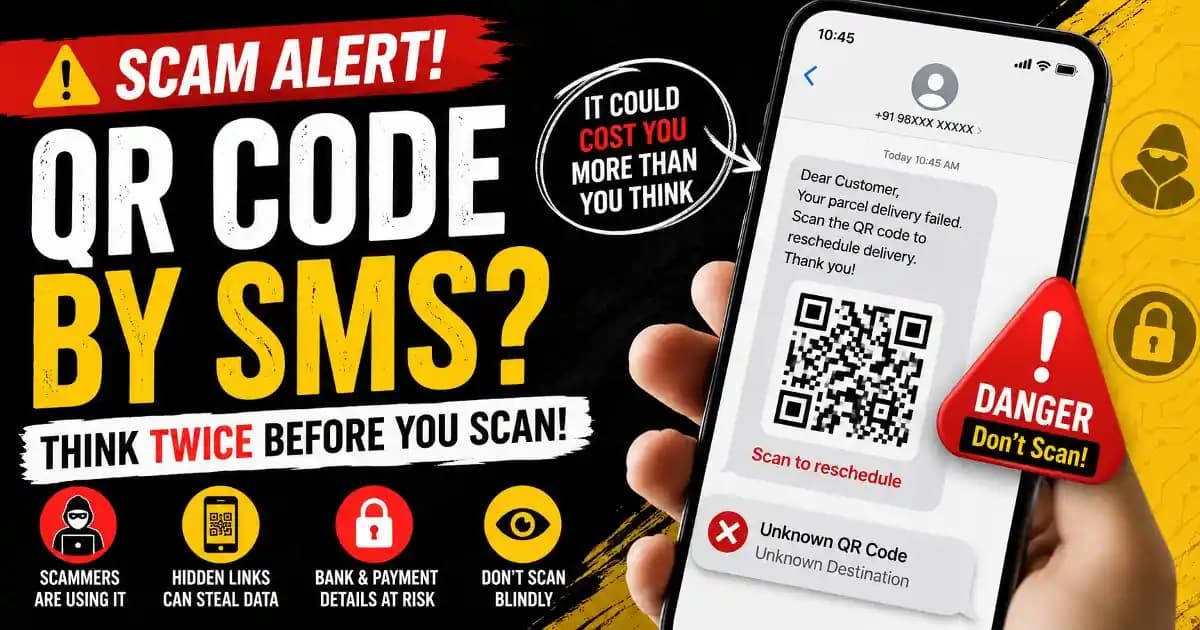
QR code SMS scam messages are appearing more frequently on smartphones as attackers shift away from obvious phishing links and toward QR-based deception that feels more modern, cleaner, and harder to detect. Many users now encounter QR codes through banking alerts, delivery updates, account verification requests, parking payments, event tickets, and even workplace collaboration tools.
The QR code itself often creates a false sense of legitimacy. People associate QR scanning with restaurants, digital payments, airline check-ins, and trusted apps. That familiarity makes users less cautious than they might be with a Suspicious web link.
Scammers understand this behavioral shift extremely well.
Instead of Asking users to click a visible URL, many fraud campaigns now encourage scanning a QR image sent through SMS, WhatsApp, Telegram, email, or social media messaging systems. The malicious destination becomes hidden behind the QR code itself.
For users, the experience feels smoother and more trustworthy. For attackers, it bypasses some of the skepticism people developed toward traditional phishing links.
Why QR Codes Became Attractive to Modern Scammers
QR technology exploded during the pandemic years when contactless systems became part of daily life. Restaurants replaced printed menus. Businesses introduced digital check-ins. Payment platforms normalized QR scanning for transactions.
That mass adoption permanently changed user behavior.
Today, people scan codes instinctively. They rarely stop to inspect where the scan leads or why the code arrived in the first place.
Fraud operations increasingly exploit this trust because QR codes hide information visually. Unlike Suspicious (1) URLs filled with random characters, QR images look clean and harmless.
Attackers also benefit because many Messaging platforms preview normal links but cannot easily analyze QR content inside images in real time.
This creates an effective delivery mechanism for:
- Phishing websites
- Fake login portals
- Malware downloads
- Payment scams
- Credential harvesting pages
- Cryptocurrency fraud
- Fake customer support systems
The tactic works especially well on Mobile devices where users move quickly between notifications and often react impulsively.
How QR-Code SMS Scams Usually Work
Most QR scams begin with urgency or convenience.
A message may claim:
- Your package delivery failed
- Your bank account needs verification
- A payment request is pending
- Your account faces suspension
- You received a refund
- Your parking session expired
- Your workplace login needs reauthentication
Instead of presenting a clickable link, the Message includes a QR code image or asks users to scan a code attached in a follow-up message.
That small design change matters psychologically.
Scanning feels interactive and intentional. Users often perceive QR actions as more secure because the process resembles legitimate payment systems and authentication workflows they already use daily.
Once scanned, the QR code may:
- Open a fake banking site
- Launch credential theft pages
- Trigger app downloads
- Connect users to remote support scams
- Redirect to malware-hosting websites
- Request payment authorization
In some advanced cases, the QR code initiates device pairing or authentication approval processes connected to Messaging platforms and cloud Accounts.
Why QR Codes Hide Danger More Effectively Than Links
Traditional phishing often depended on users ignoring Suspicious-looking URLs. Over time, people became better at spotting strange domains, spelling mistakes, and fake websites.
QR-based scams reduce that visibility.
The destination remains Hidden until after scanning. Even then, Mobile browsers may open quickly Before users have time to inspect the address carefully.
Some QR scanners Automatically launch websites Immediately after detection, reducing the pause where users might normally reconsider.
Modern smartphones also encourage fast interactions. Notifications, autofill systems, biometric authentication, and app deep-linking create frictionless experiences designed for convenience.
Unfortunately, that convenience also helps malicious QR campaigns feel natural.
The Rise of QR Phishing in Work Environments
QR phishing is no longer limited to consumer scams.
Many organizations now use QR systems internally for:
- Wi-Fi access
- device onboarding
- meeting room systems
- identity verification
- cloud logins
- conference access
- two-factor authentication
That growing workplace familiarity creates new attack surfaces.
Cybercriminals increasingly target remote workers with fake IT support Messages containing QR codes that supposedly simplify login or Security Verification. Because employees already expect digital authentication workflows, the Request may not appear suspicious.
The attack becomes especially effective in hybrid work environments where users frequently authenticate across phones, laptops, tablets, and cloud platforms.
How Messaging Apps Accelerate QR Scam Distribution
Messaging platforms changed how phishing campaigns spread.
Older scams depended heavily on email. Modern scams increasingly move through SMS, encrypted messaging apps, Social platforms, and collaboration tools because users treat these spaces as more Personal and trusted.
QR images fit naturally into these environments.
A QR code shared through WhatsApp or Telegram often appears less aggressive than a suspicious hyperlink. Some scams even arrive through compromised accounts belonging to real contacts.
This creates social trust layered on top of visual trust.
Users may think:
- “This came from someone I know.”
- “This looks like a payment request.”
- “This resembles my banking app.”
- “I scan QR codes all the time.”
By the time suspicion appears, the phishing page may already have collected credentials or payment information.
Why Mobile Payment Ecosystems Increased the Risk
QR payments became deeply integrated into digital commerce during 2025 and 2026.
Consumers now regularly use QR systems for:
- UPI payments
- restaurant orders
- public transportation
- retail checkouts
- peer-to-peer transfers
- event tickets
- digital wallets
This normalization changed user psychology around scanning.
Instead of viewing QR codes cautiously, many people now associate them with convenience and speed. Fraudsters exploit this behavioral shortcut by designing scams that imitate payment confirmation systems or account verification pages.
In some cases, fake QR payment requests redirect victims into authorizing transfers themselves rather than directly stealing credentials.
That distinction matters because victims may not initially recognize the event as fraud.
The Hidden Privacy Risks Behind QR Scanning
Not every malicious QR code aims to steal money immediately.
Some campaigns focus on Data Collection and long-term Tracking.
Scanning a QR code may expose:
- Device information
- IP addresses
- Browser fingerprints
- Location data
- Login habits
- Phone operating system details
Attackers sometimes use this information to build profiles for future phishing attempts or account targeting.
Because QR interactions feel lightweight and temporary, users rarely think about the amount of metadata generated during the process.
How Legitimate QR Use Makes Detection Harder
The challenge with QR scams is that legitimate QR use is now everywhere.
Banks, airlines, restaurants, payment systems, retailers, and government services all rely on QR technology daily. Users cannot realistically avoid scanning entirely.
That forces people into a more difficult security mindset where context matters more than the technology itself.
A QR code is not automatically Dangerous. But an unexpected QR code arriving through SMS deserves the same skepticism users now apply to suspicious links.
The biggest warning signs often involve urgency, unexpected requests, payment pressure, account verification demands, or messages designed to create panic.
What Users Should Do Before Scanning a QR Code From SMS
Users should pause before scanning codes that arrive unexpectedly through text messages or messaging apps.
Important questions include:
- Was I expecting this message?
- Does the sender identity make sense?
- Why use a QR code instead of an official app?
- Is there urgency pushing me to act quickly?
- Does the request involve payments or credentials?
Many smartphones now display preview URLs before opening QR destinations. Taking a few seconds to inspect the address can prevent account compromise.
Users should also prefer Accessing banks, delivery services, and payment platforms directly through official apps instead of scanning links delivered unexpectedly through SMS.
The Bigger Shift Happening in Mobile Phishing
The rise of QR phishing reflects a broader change in digital scams.
Attackers increasingly design fraud around modern user behavior rather than old technical weaknesses. Instead of crude phishing emails filled with broken English, scams now imitate real digital workflows users encounter every day.
QR systems fit perfectly into this evolution because they blend convenience, trust, and visual simplicity.
As smartphones continue replacing physical wallets, tickets, menus, passwords, and verification systems, QR interactions will likely become even more common. That means QR-based phishing will probably continue expanding alongside legitimate use.
The most important defense may not be avoiding QR codes completely. It may be rebuilding the habit of slowing down before interacting with digital systems that feel routine.
In the modern mobile ecosystem, convenience itself has become one of the most effective tools scammers exploit.