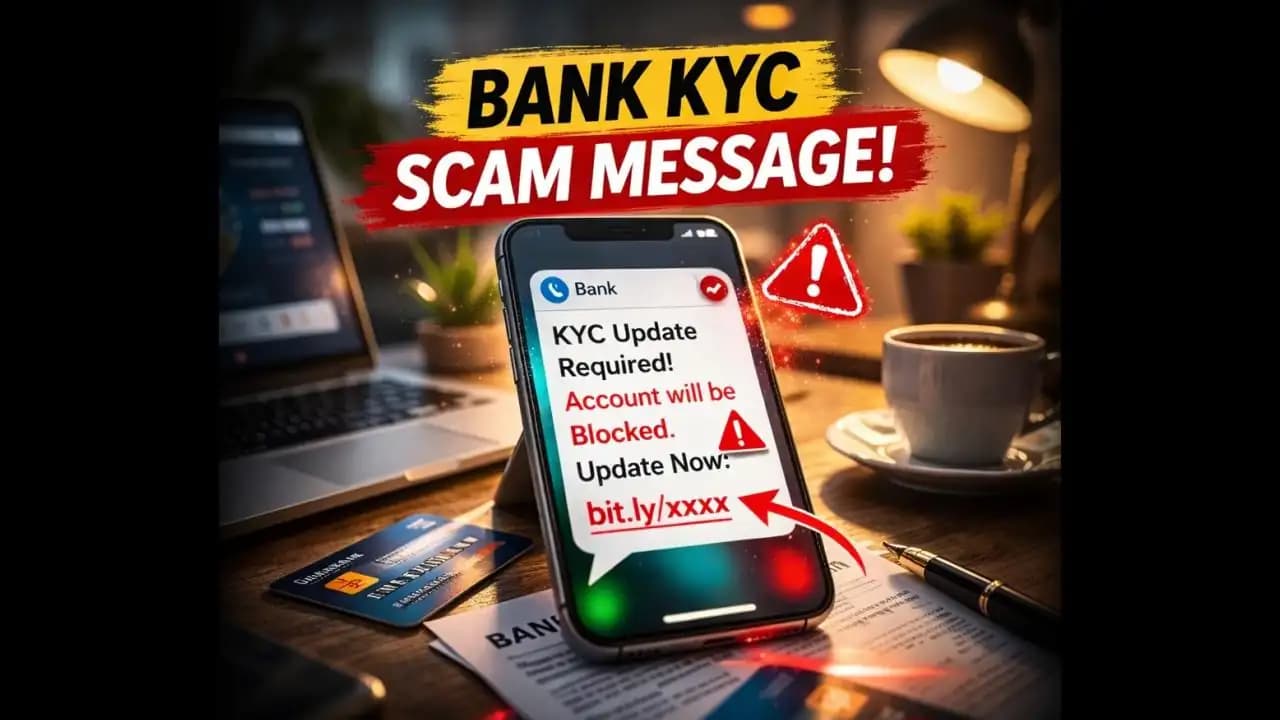
Bank KYC scam message alerts are becoming increasingly common on smartphones. Many users suddenly receive an SMS claiming their bank account will be blocked unless they update their KYC details immediately. The message usually includes a link and sounds urgent. For someone checking their phone during a busy day, it can look completely legitimate. But that quick tap on the link may lead to a fake banking page designed to steal sensitive information.
Over the past several months, more people have reported receiving these suspicious SMS Messages. While they appear routine at first glance, they are part of a growing phishing strategy targeting everyday mobile users.
A Situation Many Mobile Users Are Experiencing
Imagine this situation.
You’re going through your phone Messages when a new SMS pops up. It looks official and includes your bank’s name.
The message might read something like this:
“Dear Customer, your bank KYC is pending. Your account will be blocked today. Update KYC immediately: http://bank-update-verify.com”
At first, the message triggers concern.
Nobody wants their bank account suddenly blocked. Many users click the link without thinking too much, assuming it’s part of routine banking Verification.
Once the page opens, it often looks convincing.
You might see a page asking for:
- Your name
- Account number
- Debit card details
- ATM PIN
- One-time password (OTP)
Because the page resembles a real bank Website, many people enter the information. Only later do they realize that the site was fake.
By then, the scammers may already have Access to sensitive financial details.
Why People Are Suddenly Seeing These Bank KYC Messages
These scams work because KYC updates are a normal part of banking.
Most customers know that banks occasionally Request identity Verification. Fraudsters take advantage of that familiarity.
Instead of hacking bank systems, they simply send large volumes of SMS Messages to random phone numbers.
Their goal is Simple: convince a small number of recipients to click the link.
Once someone visits the fake page, the scam enters its second stage Collecting Personal and banking information.
In some cases, attackers even follow up with a phone call Pretending to be a bank representative.
They may say something like:
“We noticed your KYC update request. Please confirm the OTP we sent.”
At that moment, the victim unknowingly provides the final step needed to authorize fraudulent transactions.
Warning Signs That the SMS Is Not From Your Bank
Although these Messages try to appear genuine, there are usually small clues that reveal something is wrong.
One common sign is unexpected urgency.
Scam messages often say things like:
- “Your account will be blocked today”
- “Immediate KYC verification required”
- “Update now to avoid suspension”
Real banks rarely threaten instant Account closure Through SMS.
Another red flag is the link itself.
Instead of directing you to the bank’s official website, the link may contain unusual words or random domains.
Examples might include:
- bank-verify-update.net
- secure-kyc-check.xyz
- bank-alert-info.com
These domains are not affiliated with legitimate financial institutions.
Another sign is the request for sensitive information.
Banks typically do not ask for:
- ATM PINs
- Full card details
- Internet banking passwords
- OTP codes via SMS links
If a page asks for this information, it is almost certainly fraudulent.
Why This Scam Can Be So Dangerous
Unlike many online scams, this one directly targets financial information.
Once scammers obtain banking details, they can attempt several types of fraud.
Some attackers use stolen information to:
- Make unauthorized online purchases
- Transfer money through digital payment apps
- Attempt card transactions
- Access online banking portals
Even if a transaction fails, the criminals may continue trying different methods.
Another risk is identity misuse.
Information collected from fake KYC forms may include:
- Full name
- Phone number
- Address
- Bank account information
This data can later be used for additional scams, identity fraud, or Social engineering attempts.
Because the victim willingly entered the information, it can sometimes take time Before the fraud is discovered.
How Bank KYC Scams Have Evolved in 2024–2025
Phishing scams involving bank messages are not new, but their tactics have become more sophisticated in recent years.
During 2024 and 2025, several trends have become noticeable.
First, scammers now create highly convincing fake websites that closely resemble real banking portals.
These pages often include logos, color schemes, and layouts that mimic official bank apps or websites.
Second, attackers frequently combine SMS messages with follow-up phone calls.
After a victim clicks the link, the scammer may call pretending to help complete the Verification process.
This combination makes the situation feel more authentic.
Another emerging tactic involves targeting mobile users specifically.
Because many People rely on smartphones for banking, phishing pages are optimized for Mobile screens. This makes the fake pages look more realistic and easier to navigate.
As a result, users may not notice Suspicious details they might have spotted on a larger computer screen.
Simple Ways to Stay Safe From Bank KYC SMS Scams
Protecting yourself from these scams mostly comes down to slowing down and Verifying messages before acting.
One important rule is simple:
Never update bank details through links received in SMS messages.
If you receive a message about KYC verification, it’s safer to visit your bank’s official website directly or open the bank’s official mobile app.
Another helpful habit is checking the sender.
Many scam messages come from unknown numbers rather than verified bank sender IDs.
If you are unsure, contacting the bank through official customer support can quickly clarify whether the message is legitimate.
You can also reduce risk by avoiding sharing sensitive information online unless you initiated the process yourself.
And if you accidentally click a suspicious link, avoid entering any personal or banking information.
Simply close the page.
A Moment of Panic Is Exactly What Scammers Want
Scammers design these messages to trigger quick reactions.
The idea that your bank account might be blocked can cause immediate concern. That moment of worry is when people are most likely to act without verifying the message.
But legitimate banks usually communicate important account updates through official apps, secure websites, or verified channels.
Taking a few extra seconds to check the message can make a huge difference.
If something feels urgent, unfamiliar, or slightly unusual, it’s worth pausing before tapping the link.
Awareness remains one of the strongest defenses against digital fraud. Recognizing how these scams operate makes it far easier to avoid them.
FAQ
What is a bank KYC scam message?
A bank KYC scam message is a fraudulent SMS claiming that your bank account requires urgent KYC verification. The message usually contains a phishing link designed to steal personal or financial information.
Can banks send KYC update links through SMS?
Most legitimate banks do not ask customers to update KYC details through random SMS links. Banks usually request updates through official apps, websites, or secure branches.
What should I do if I clicked a bank KYC scam link?
If you clicked the link but did not enter any details, simply close the page. If you entered sensitive information, contact your bank Immediately and monitor your account for suspicious transactions.
How can I tell if a bank SMS is fake?
Fake bank messages often create urgency, contain suspicious links, and request sensitive information such as PINs or OTP codes. If the message feels unusual, verify it directly with your bank before taking any action.