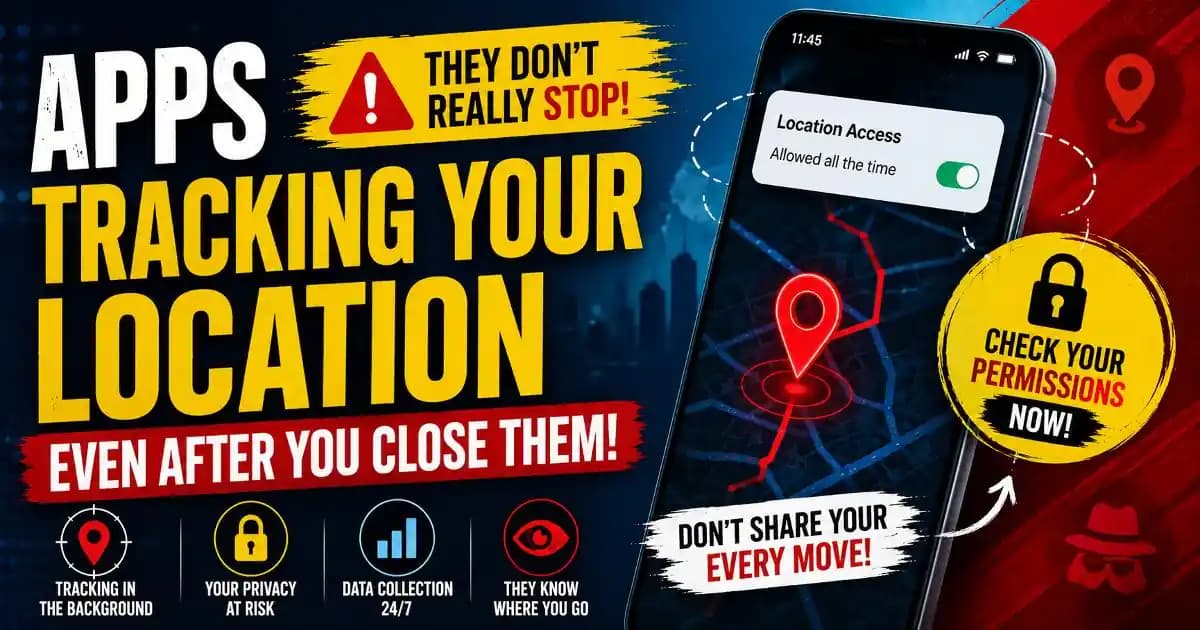
Apps tracking location in background are becoming a growing concern for smartphone users who increasingly notice that certain apps seem to know where they are even after the application is closed. A restaurant recommendation appears minutes after driving somewhere new. A shopping notification arrives shortly after visiting a store. A weather app somehow continues updating precise movement patterns long after users thought they stopped using it.
For many people, this creates an uncomfortable realization: closing an app does not always mean the app stops Collecting location data.
Modern smartphones operate inside highly connected ecosystems where apps, operating systems, cloud platforms, advertising networks, analytics frameworks, and AI-driven personalization systems continuously exchange behavioral signals. Location data became one of the most valuable signals in that ecosystem because physical movement reveals routines, habits, interests, workplaces, shopping behavior, and social patterns.
What makes the issue more confusing is that background tracking is not always malicious. Some apps legitimately need ongoing location Access for navigation, delivery tracking, emergency alerts, fitness monitoring, or ride-sharing functionality.
The Problem is that users often struggle to understand when tracking is necessary, when it becomes excessive, and how much data continues flowing after an app disappears from the screen.
Why Closing an App Does Not Always Stop Tracking
Many users assume swiping away an app fully shuts it down. On modern Android and iPhone systems, that assumption is often inaccurate.
Smartphone operating systems allow apps to continue performing limited Background activities under certain conditions. Depending on Permissions, an app may still:
- Access location updates
- Refresh content silently
- Communicate with cloud servers
- Trigger notifications
- Monitor geofencing events
- Run background services
- Sync analytics information
This behavior exists partly because Mobile ecosystems prioritize convenience. Users expect Delivery apps to track drivers in real time. Navigation apps need ongoing GPS access during trips. Fitness apps monitor movement continuously.
But the same infrastructure supporting useful features can also support aggressive behavioral Tracking.
Modern Mobile systems are designed less like isolated software programs and more like constantly connected service layers.
How Background Location Tracking Actually Works
Location tracking today involves far more than GPS alone.
Smartphones estimate location using combinations of:
- GPS satellites
- Wi-Fi networks
- Bluetooth signals
- Cell tower triangulation
- Nearby device detection
- Motion sensors
- IP address information
This multi-layered system allows apps to maintain surprisingly accurate awareness of user movement even when GPS usage Appears limited.
Some apps also use geofencing technology, which creates invisible virtual boundaries around locations. When a user enters or leaves a defined area, the app can trigger actions Automatically.
For example, a retail app may detect that someone entered a shopping district and send promotional notifications. A ride-sharing app may preload nearby driver availability. A Social app may suggest local content.
These interactions often happen silently in the background.
Why Location Data Became So Valuable
Location information reveals behavior patterns that many other forms of data cannot.
Over time, movement history can indicate:
- Where someone lives
- Where they work
- Shopping habits
- Travel routines
- Daily schedules
- Social activity
- Health-related visits
- Personal interests
For advertising systems, this information is extremely valuable because physical behavior often predicts consumer intent more accurately than Online clicks alone.
A person visiting gyms regularly may Receive fitness advertisements. Someone frequently stopping near car dealerships may enter automotive marketing segments. Regular airport visits may trigger travel-related promotions.
The modern advertising ecosystem increasingly combines location History with browsing activity, app usage, purchases, and AI-driven behavioral analysis.
This creates detailed profiles that extend far beyond simple navigation assistance.
Why Users Are Becoming More Concerned During 2025 and 2026
Public awareness around mobile Privacy changed significantly over the past few years.
Users now notice how often digital systems appear to predict physical behavior. A person discusses travel plans, visits a location, or shops somewhere once, then Suddenly receives highly targeted content across multiple apps.
This creates the feeling that phones are “always watching.”
In reality, much of this personalization comes from large-scale behavioral analytics systems processing location signals continuously in the Background.
AI-driven recommendation engines amplified the effect because modern personalization systems combine:
- Movement patterns
- Search activity
- Purchase history
- App interactions
- Social behavior
- Device usage habits
The result feels unusually predictive and sometimes invasive.
Users increasingly realize that location Permissions are not only about maps anymore. They became part of broader behavioral intelligence systems.
The Difference Between “While Using” and “Always” Permissions
Both Android and iOS introduced more granular location controls in response to growing privacy concerns.
Modern devices often allow users to choose:
- Allow once
- Allow while using the app
- Always allow
- Approximate location only
But many users grant permissions quickly without fully understanding the implications.
“Always allow” typically permits background tracking even when the app is not actively open.
Some apps strongly encourage this permission by claiming improved functionality, faster performance, or better recommendations. In certain cases, the Request is legitimate. In others, the Data Collection may exceed what users reasonably expect.
The challenge is that modern apps increasingly frame continuous tracking as part of convenience and personalization.
How Advertising Ecosystems Influence Background Tracking
Many free apps rely heavily on advertising revenue.
To improve targeting effectiveness, apps often integrate third-party advertising SDKs and analytics systems capable of Collecting behavioral information. Location data becomes particularly useful because it helps advertisers connect digital activity with real-world behavior.
Some apps may not directly misuse location themselves, yet still share information Through broader advertising ecosystems.
This creates a complicated chain where users interact with one app while multiple external systems process behavioral signals behind the scenes.
The ecosystem is so interconnected that even seemingly simple utility apps can become part of larger data collection networks.
Why Battery Optimization Makes the Issue More Confusing
Many users assume background tracking would destroy battery life instantly.
Modern operating systems, however, became extremely efficient at managing background processes.
Apps may collect intermittent location updates rather than maintaining continuous GPS activity. Devices also combine low-power location estimation methods with periodic synchronization to reduce battery impact.
This efficiency makes background tracking less visible.
In earlier smartphone eras, aggressive location monitoring often caused obvious battery drain. Today, the behavior can remain subtle enough that users barely notice it.
As smartphones become more optimized, persistent tracking blends more naturally into everyday device usage.
The Role of AI and Predictive Personalization
AI systems increasingly depend on contextual awareness to deliver personalized experiences.
Location data provides valuable context because it helps AI understand:
- Routine behavior
- Travel patterns
- Lifestyle preferences
- Shopping environments
- Work schedules
- Activity timing
Some AI-powered assistants use location patterns to predict destinations, recommend nearby services, optimize reminders, or automate tasks.
While these features can feel useful, they also deepen the relationship between location tracking and behavioral profiling.
The more AI systems personalize digital experiences, the more incentive platforms have to maintain ongoing contextual awareness.
Why Some Apps Push for Permanent Access
Many apps now compete to become proactive assistants rather than passive tools.
Instead of waiting for users to open them manually, apps increasingly want to:
- Predict needs
- Deliver timely recommendations
- Send contextual notifications
- Track nearby activity
- Automate services
Continuous location access supports this business model.
For example, shopping apps may trigger offers near stores. Delivery platforms optimize logistics based on movement. Social apps suggest nearby events. Mobility services predict commuting behavior.
The smartphone effectively becomes a continuous behavioral sensor.
What Users Should Review on Their Phones
Users do not need to disable every location feature completely. Many services genuinely depend on accurate location functionality.
But reviewing permissions periodically is increasingly important.
Useful questions include:
- Does this app truly need constant location access?
- Could “while using” permission work instead?
- Why does a simple utility app require precise tracking?
- Does the app still justify the permission months later?
- Is approximate location sufficient?
Modern Android and iPhone systems now provide dashboards showing which apps accessed location recently. These tools help users Identify apps behaving more aggressively than expected.
People should be especially cautious with:
- Unknown utility apps
- Free flashlight or wallpaper apps
- Third-party keyboard apps
- Suspicious social platforms
- Apps downloaded outside official marketplaces
Some low-quality apps collect excessive data primarily for advertising and profiling purposes rather than meaningful functionality.
The Bigger Shift Happening Across Mobile Privacy
The debate around background location tracking reflects a broader transformation happening across digital life.
Smartphones evolved from communication tools into behavioral platforms constantly interpreting how people move, shop, travel, work, and interact with the physical world.
Location data sits at the center of that transformation because physical movement reveals context more powerfully than almost any other signal.
As AI personalization expands across mobile ecosystems, continuous contextual awareness will likely become even more valuable to technology platforms.
The future privacy challenge may not involve obvious spying in the traditional sense. Instead, it may involve users gradually normalizing continuous behavioral observation in exchange for convenience, personalization, and automation.
For many smartphone users, the most important realization is simple: closing an app does not necessarily end the relationship between that app and their daily movement patterns.