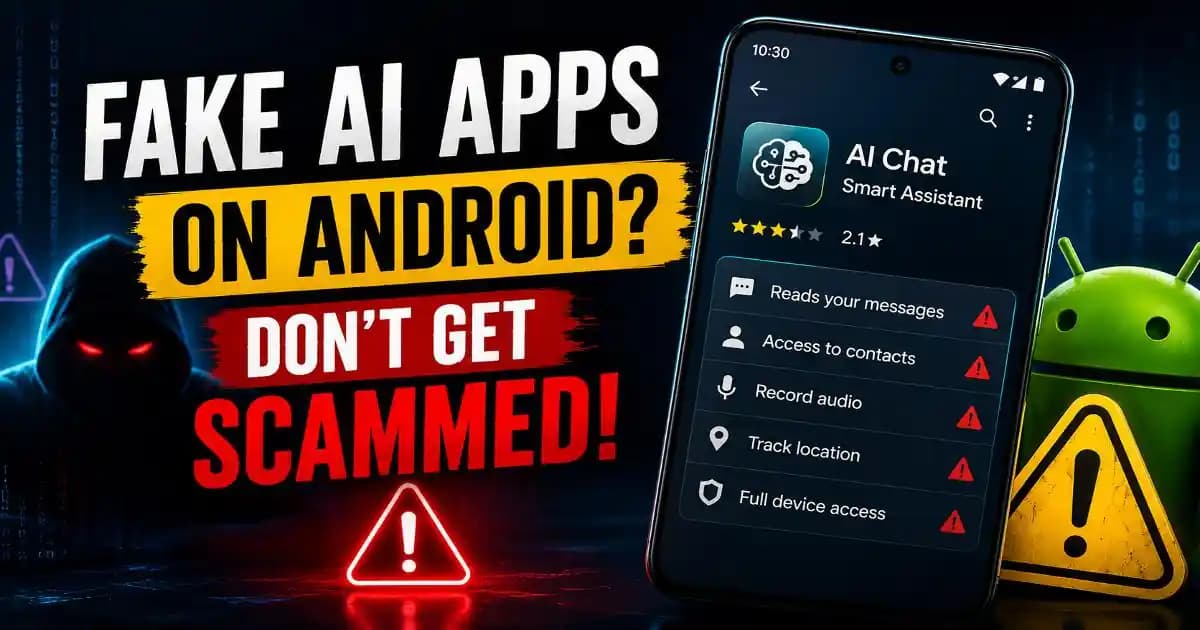
Identify suspicious apps before installing them because what looks like a harmless download can quickly turn into a privacy risk. You might be searching for a photo editor, a game, or even a utility app, and within seconds of installing it, your phone starts behaving differently. More ads appear. Battery drains faster. Or worse, you start getting strange OTP requests or banking alerts you didn’t initiate.
For many users, this moment comes too lateafter the app is already installed and Permissions have been granted without a second thought.
This article will help you slow down that moment just enough to notice the Warning signs.
A Situation Many Smartphone Users Have Experienced
Imagine this.
You’re scrolling through Your Phone late at night and see an app promising something useful:
- “Boost your phone speed instantly”
- “Earn money by watching videos”
- “See who viewed your profile”
It has a decent icon. The name sounds familiar. You tap Install.
At first, everything feels normal. But then:
- The app asks for access to your contacts, SMS, and storage
- Pop-ups start appearing even when the app is closed
- Your phone becomes slower than before
You uninstall it, but something doesn’t feel right.
This is how many users unknowingly interact with Suspicious appsnot because they’re careless, but because these apps are designed to feel trustworthy.
Why More People Are Seeing Suspicious Apps Recently
Over the past year, especially Through 2024 and into 2025, there has been a noticeable rise in apps that look legitimate but behave differently after Installation.
There are a few reasons behind this:
1. App Stores Are Crowded
With millions of apps available, it’s easier for harmful apps to blend in. Some even mimic the names and icons of popular apps.
2. Fast Publishing Cycles
Developers can upload apps quickly. While platforms review them, some malicious apps still slip through Before being removed.
3. Social Media Promotion
Suspicious apps are often promoted through:
- WhatsApp forwards
- Telegram channels
- Short video platforms
These promotions create urgency, making users install apps without checking Details.
4. Fake Reviews and Ratings
Some apps artificially boost their ratings with fake reviews, making them appear safe at first glance.
Common Warning Signs You Should Never Ignore
Recognizing a Suspicious app isn’t about being technicalit’s about noticing small details that feel “off.”
Here are some practical signs to watch for:
1. The App Asks for Too Many Permissions
A flashlight app asking for:
- Contacts access
- SMS permissions
- Microphone usage
This should immediately raise concern.
Always ask: Does this app really need this access to function?
2. Poorly Written Description
Look closely at the app description.
Signs to watch:
- Broken English
- Repeated phrases
- Overpromising results (“100% guarantee,” “instant hack,” etc.)
These often indicate low-quality or suspicious development.
3. Very Few Downloads with High Ratings
An app with:
- 5-star ratings
- But only 500 or 1,000 downloads
This mismatch can indicate fake reviews.
4. Reviews That Feel Fake
Scroll through reviews and notice patterns:
- Repeated sentences
- Generic praise like “Very good app”
- No real user experience described
Real users usually mention specific features or issues.
5. Unknown Developer Name
Tap on the developer name.
Ask yourself:
- Does it sound familiar?
- Do they have other apps?
- Are those apps also poorly rated?
A single app with no developer history can be a red flag.
6. Sudden Pop-Ups After Installation
If an app immediately shows:
- Ads on your home screen
- Notifications unrelated to its purpose
It may be adware or worse.
7. App Size Doesn’t Match Function
A simple calculator app that is 200MB in size?
That’s unusual and worth questioning.
Why Installing the Wrong App Can Be Risky
Many users assume that the worst-case scenario is just annoying ads.
But in reality, the risks can be more serious.
1. Data Collection Without Awareness
Some apps quietly collect:
- Contacts
- Messages
- Location data
This data can be used for targeted scams or sold to third parties.
2. Financial Risks
If an app gains access to SMS or notifications, it may:
- Read OTP messages
- Interfere with banking alerts
This creates a pathway for unauthorized transactions.
3. Device Performance Issues
Suspicious apps often run background processes that:
- Drain battery
- Slow down your phone
- Increase data usage
4. Exposure to Further Scams
Once your data is exposed, you may start receiving:
- Fake bank messages
- Phishing links
- Fraud calls
Many scams begin with a single app installation.
How Suspicious Apps Have Evolved (2024–2025 Trends)
The way these apps operate has changed in recent years.
More Polished Design
Earlier, Suspicious apps looked obviously fake. Now, many have:
- Clean interfaces
- Professional icons
- Smooth user experience
Delayed Malicious Behavior
Some apps behave normally for a few days before showing ads or Requesting more Permissions. This delays suspicion.
Use of Trending Themes
Apps now use popular trends like:
- AI photo editing
- Crypto earnings
- “Secret viewer” tools
This increases downloads quickly.
Permission Requests After Installation
Instead of Asking everything upfront, apps now request Permissions gradually, making users more likely to accept them.
Simple Ways to Protect Yourself Before Installing Any App
You don’t need technical knowledgejust a few careful Habits.
1. Pause Before You Install
Take 30 seconds to check:
- Reviews
- Developer name
- Permissions
This small pause can prevent bigger issues.
2. Stick to Trusted Sources
Avoid installing apps from:
- Unknown websites
- Shared APK files on WhatsApp or Telegram
3. Read Permissions Carefully
If something feels unnecessary, don’t allow it.
You can always deny access and see if the app still works.
4. Check App History
Look at:
- When the app was last updated
- Whether it has consistent updates
Inactive apps with many downloads can be risky.
5. Watch Your Phone After Installation
For the first 24–48 hours, notice:
- Battery usage
- New ads
- Unusual notifications
If something feels off, uninstall immediately.
6. Trust Your Instinct
If an app feels suspiciouseven slightlyit’s better to avoid it.
A Final Thought Most Users Realize Too Late
Most people don’t think about app safety until something goes wrong.
It’s rarely a big mistake. It’s usually a small decision:
- Installing quickly
- Skipping reviews
- Allowing permissions without reading
The reality is, suspicious apps don’t always look Dangerous. They look useful, helpful, or even entertaining.
That’s what makes them effective.
Learning to identify suspicious apps is not about being paranoidit’s about being aware.
Because in today’s Mobile world, your phone is more than just a device. It holds your Personal conversations, financial information, and daily habits.
And protecting it often starts with a single decision: whether to tap “Install” or not.
FAQs
1. How can I quickly identify suspicious apps before installing?
Check Permissions, reviews, developer name, and download count. If anything feels inconsistent or unnecessary, avoid Installing.
2. Are apps from official app stores always safe?
Most are safe, but not all. Some suspicious apps still manage to appear briefly before being removed, so user awareness is still important.
3. What should I do if I already installed a suspicious app?
Uninstall it Immediately, review app permissions, and monitor your phone for unusual Activity like unknown Messages or transactions.
4. Can suspicious apps access my bank details?
They usually don’t directly access bank Accounts, but they can read OTPs or notifications, which can increase the risk of fraud if combined with other attacks.
This article follows the guidance and structure provided in your uploaded brief and is optimized for clarity, realism, and mobile readability.